

Friday, December 14, 2007

3rd Sunday of Advent

Gaudete Sunday

"John the Baptist" by Titian

“What did you go out to the desert to see? A reed swayed by the wind? Then what did you go out to see? Someone dressed in fine clothing? Those who wear fine clothing are in royal palaces. Then why did you go out? To see a prophet? Yes, I tell you, and more than a prophet. This is the one about whom it is written: Behold, I am sending My messenger ahead of You; he will prepare Your way before You. Amen, I say to you, among those born of women there has been none greater than John the Baptist; yet the least in the Kingdom of Heaven is greater than he.”

Collect (Opening Prayer)

Official Latin from the 1969 & 2002 Roman Missals
Orémus. Deus, qui cónspicis pópulum tuum nativitátis domínicæ festivitátem fidéliter exspectáre, præsta, quaésumus, ut valeámus ad tantæ salútis gáudia perveníre, et ea votis sollémnibus álacri semper lætítia celebráre.
Per Dóminum nostrum Iesum Christum, Fílium tuum, qui tecum vivit et regnat in unitáte Spíritus Sancti, Deus, per ómnia saécula sæculórum.

Official 1973 I.C.E.L. Translation (Used at Mass in English)
Let us pray. Lord God, may we, your people, who look forward to the birthday of Christ experience the joy of salvation and celebrate that feast with love and thanksgiving.
We ask this through our Lord Jesus Christ, your Son, who lives and reigns with you and the Holy Spirit, one God, for ever and ever.

My Own Literal Translation
Let us pray. O God, You Who look attentively upon Your people faithfully awaiting the feast day of the birth of the Lord, grant, we beseech You, that we may be worthy to attain to the joys of so great a salvation, and to celebrate them always with eager joy through these solemn offerings.
Through our Lord Jesus Christ, Your Son, Who lives and reigns with You, in the unity of the Holy Spirit, one God, forever and ever.

Prayer Over the Gifts

Official Latin from the 1969 & 2002 Roman Missals
Devotiónis nostræ tibi, Dómine, quaésumus, hóstia iúgiter immolétur, quæ et sacri péragat institúta mystérii et salutáre tuum nobis poténter operétur.
Per Christum Dóminum nostrum.

Official 1973 I.C.E.L. Translation (Used at Mass in English)
Lord, may the gift we offer in faith and love be a continual sacrifice in your honor and truly become our eucharist and our salvation.
Grant this through Christ our Lord.

My Own Literal Translation
May this Sacrifice of our devotion, we beseech You, O Lord, be continually offered to You, that It may both accomplish the purpose of this Sacred Mystery and powerfully work in us Your salvation.
Through Christ our Lord.

Preface
Preface I of Advent: On the two comings of Christ

Official Latin from the 1969 & 2002 Roman Missals
Vere dignum et iustum est, æquum et salútare, nos tibi semper et ubíque grátias ágere: Dómine, sancte Pater, omnípotens ætérne Deus: per Christum Dóminum nostrum.
Qui, primo advéntu in humilitáte carnis assúmptæ, dispositiónis antíquæ munus implévit, nobísque salútis perpétuæ trámitem reserávit: ut, cum secúndo vénerit in suæ glória maiestátis, manifésto demum múnere capiámus, quod vigilántes nunc audémus expectáre promíssum.
Et ídeo cum Angelis et Archángelis, cum Thronis et Dominatiónibus, cumque omni milítia cæléstis exércitus, hymnum glóriæ tuæ cánimus, sine fine dicéntes:
Sanctus, Sanctus, Sanctus ...

Official 1973 I.C.E.L. Translation (Used at Mass in English)
Father, all-powerful and ever-living God, we do well always and everywhere to give you thanks through Jesus Christ our Lord.
When he humbled himself to come among us as a man, he fulfilled the plan you formed long ago and opened for us the way to salvation. Now we watch for the day, hoping that the salvation promised us will be ours when Christ our Lord will come again in his glory.
And so, with all the choirs of angels in heaven we proclaim your glory and join in their unending hymn of praise:
Holy, holy, holy ...

My Own Literal Translation
It is truly right and just, proper and availing unto salvation, that we always and everywhere give thanks to You, O Lord, Holy Father, Almighty and Eternal God: through Christ our Lord.
Who, in His first coming in the lowliness of assumed flesh, fulfilled the work of Your ancient arrangement, and opened to us the path to eternal salvation: so that, when He will come again in the Glory of His Majesty, we may then indeed openly take hold of that gift, a promise which we now dare to await with vigilance.
And so, with the Angels and Archangels, with the Thrones and Dominations, and with all the host of the Heavenly Army, we sing the hymn of Your Glory, saying without end:
Holy, Holy, Holy ...

Post-Communion Prayer

Official Latin from the 1969 & 2002 Roman Missals
Orémus. Tuam, Dómine, cleméntiam
implorámus, ut hæc divína subsídia, a vítiis expiátos, ad festa ventúra nos praéparent.
Per Christum Dóminum nostrum.

Official 1973 I.C.E.L. Translation (Used at Mass in English)
Let us pray. God of mercy, may this eucharist bring us your divine help, free us from our sins, and prepare us for the birthday of our Savior,
who is Lord for ever and ever.

My Own Literal Translation
Let us pray. We beg of Your merciful love, O Lord, that this Divine Assistance, by atoning for our offenses, may prepare us for the coming Feast day.
Through Christ our Lord.

RS

Thursday, December 13, 2007

Saint Lucy pic

Just thought I would share a picture I took of a painting above one of the side altars at the Basilica di San Benedetto in Norcia (Nursia), Italy.

Saint Lucy surrounded by Our Lady with Christ Child, Saint Charles Borromeo(?) and another Saint I'm not sure of


I took this picture back in 2001 with a [gasp] film camera.

You can read about her life at the Catholic Encyclopedia entry on Saint Lucy.

RS

Part of Loome bookstores closing

Well, it's good news/bad news.

The good news is that Loome Theological Booksellers will remain open.

However, the bad news (or maybe good news if you live in Minnesota) is that Loome Antiquarian Booksellers is closing.

Here's the ad I just received by email (pretty funny actually).


RS

Tuesday, December 11, 2007

I'm a contributor

I'm not sure if I should be proud or ashamed, but I helped contribute to The Crescat's "Ugly Vestment Contest." The searching was VERY painful on the eyes. Man can be quite creative, but it's sad when that creativity is used for evil purposes.
(Thanks to those who helped me with a couple of submissions.)

Let's just say it's sad when this is a rather conservative vestment compared to the ones in the contest:


'Nuff said?

There are three categories:

1) Men's Vestments

2) Ladies Vestments

3) Stoles and Mitres

So go vote at The Crescat blog.

RS

Monday, December 10, 2007

Roman Sacristan in Corporate America?

Time for some Monday levity.

Wonder why I hate corporate America? or is it corporate America hates me?

(No, in spite of the name fathead, that's not me in the commerical ... just my stunt double.)


RS

Sunday, December 09, 2007

2nd Sunday of Advent - Comparison of Prayers

"Preaching of Saint John the Baptist" (detail) by Bartolomeus Greenergh

Collect (Opening Prayer)

Official Latin from the 1969 & 2002 Roman Missals
Orémus. Omnípotens et miséricors Deus, in tui occúrsum Fílii festinántes nulla ópera terréni actus impédiant, sed sapiéntiæ cæléstis erudítio nos fáciat eius esse consórtes.
Qui tecum vivit et regnat, in unitáte Spíritus Sancti Deus, per ómnia saécula sæculórum.

Official 1973 I.C.E.L. Translation (Used at Mass in English)
Let us pray. God of power and mercy, open our hearts in welcome. Remove the things that hinder us from receiving Christ with joy, so that we may share his wisdom and become one with him when he comes in glory,
for he lives and reigns with you and the Holy Spirit, one God, for ever and ever.

My Own Literal Translation
Let us pray. Almighty and Merciful God, may no works of worldly deeds ensnare those hurrying to meet Your Son, but may the learning of Heavenly wisdom make us to be co-heirs of Him.
Who lives and reigns with You, in the unity of the Holy Spirit, God, forever and ever.

Prayer Over the Gifts

Official Latin from the 1969 & 2002 Roman Missals
Placáre, Dómine, quaésumus, nostræ précibus humilitátis et hóstiis, et, ubi nulla súppetunt suffrágia meritórum, tuæ nobis indulgéntiæ succúrre præsídiis.
Per Christum Dóminum nostrum.

Official 1973 I.C.E.L. Translation (Used at Mass in English)
Lord, we are nothing without you. As you sustain us with your mercy, receive our prayers and offerings.
We ask this through Christ our Lord.

My Own Literal Translation
Be appeased, we beseech You, O Lord, by the prayers and sacrificial offerings of our humility, and, where the support of our merits is insufficient, help us with the aid of Your forgiveness.
Through Christ our Lord.

Preface
Preface I of Advent: On the two comings of Christ

Official Latin from the 1969 & 2002 Roman Missals
Vere dignum et iustum est, æquum et salútare, nos tibi semper et ubíque grátias ágere: Dómine, sancte Pater, omnípotens ætérne Deus: per Christum Dóminum nostrum.
Qui, primo advéntu in humilitáte carnis assúmptæ, dispositiónis antíquæ munus implévit, nobísque salútis perpétuæ trámitem reserávit: ut, cum secúndo vénerit in suæ glória maiestátis, manifésto demum múnere capiámus, quod vigilántes nunc audémus expectáre promíssum.
Et ídeo cum Angelis et Archángelis, cum Thronis et Dominatiónibus, cumque omni milítia cæléstis exércitus, hymnum glóriæ tuæ cánimus, sine fine dicéntes:
Sanctus, Sanctus, Sanctus ...

Official 1973 I.C.E.L. Translation (Used at Mass in English)
Father, all-powerful and ever-living God, we do well always and everywhere to give you thanks through Jesus Christ our Lord.
When he humbled himself to come among us as a man, he fulfilled the plan you formed long ago and opened for us the way to salvation. Now we watch for the day, hoping that the salvation promised us will be ours when Christ our Lord will come again in his glory.
And so, with all the choirs of angels in heaven we proclaim your glory and join in their unending hymn of praise:
Holy, holy, holy ...

My Own Literal Translation
It is truly right and just, proper and availing unto salvation, that we always and everywhere give thanks to You, O Lord, Holy Father, Almighty and Eternal God: through Christ our Lord.
Who, in His first coming in the lowliness of assumed flesh, fulfilled the work of Your ancient arrangement, and opened to us the path to eternal salvation: so that, when He will come again in the Glory of His Majesty, we may then indeed openly take hold of that gift, a promise which we now dare to await with vigilance.
And so, with the Angels and Archangels, with the Thrones and Dominations, and with all the host of the Heavenly Army, we sing the hymn of Your Glory, saying without end:
Holy, Holy, Holy ...

Post-Communion Prayer

Official Latin from the 1969 & 2002 Roman Missals
Orémus. Repléti cibo spiritális alimóniæ, súpplices te, Dómine, deprecámur, ut, huius participatióne mystérii, dóceas nos terréna sapiénter perpéndere, et cæléstibus inhærére.
Per Christum Dóminum nostrum.

Official 1973 I.C.E.L. Translation (Used at Mass in English)
Let us pray. Father, you give us food from heaven. By our sharing in this mystery, teach us to judge wisely the things of earth and to love the things of heaven.
Grant this through Christ our Lord.

My Own Literal Translation
Let us pray. Having been filled with this Food of spiritual nourishment, we humbly beseech You, O Lord, that, through our participation in this Mystery, You may teach us to examine wisely the things of this world, and to cling to heavenly things.
Through Christ our Lord.

RS

Friday, December 07, 2007

Poll results

I probably could have designed the poll a bit better, but the end results were:

40: Yes at English Mass
25: No at English Mass
6 : Yes at non-English Mass
7 : No at non-English Mass

Overall, O Come, O Come Emmanuel was played at 60% of the readers' parishes last weekend.

At English Masses it was sung at 61.5% of the readers' parishes

And even at non-English Masses it was sung at 46%.

I guess I am not alone in hearing this song too early in Advent.

RS

Please participate in this poll.

.
EDIT - Poll closed, see results in above post.

Please vote in my poll once you've gone to Mass this Sunday (1st Sunday of Advent, December 2, 2007).

This is based on my post:

Advent betting pool and other rants.

Poll closes around noon centeral standard time Friday.

RS

Solemnity of the Immaculate Conception - Comparison of Prayers

Miter of Pope Pius IX depicting the Immaculate Conception
(recently used by Pope Benedict XVI at the last consistory)


Collect (Opening Prayer)

Official Latin from the 1969 & 2002 Roman Missals
Orémus. Deus, qui per immaculátam Vírginis Conceptiónem dignum Fílio tuo habitáculum præparásti, quaésumus, ut, qui ex morte eiúsdem Fílii tui prævísa, eam ab omni labe præservásti, nos quoque mundos, eius intercessióne, ad te perveníre concédas.Per Dóminum nostrum Iesum Christum, Fílium tuum, qui tecum vivit et regnat in unitáte Spíritus Sancti, Deus, per ómnia saécula sæculórum.

Official 1973 I.C.E.L. Translation (Used at Mass in English)
Let us pray. Father, you prepared the Virgin Mary to be the worthy mother of your Son. You let her share beforehand in the salvation Christ would bring by his death, and kept her sinless from the first moment of her conception. Help us by her prayers to live in your presence without sin.
We ask this through our Lord Jesus Christ, your Son, who lives and reigns with you and the Holy Spirit, one God, for ever and ever.

My Own Literal Translation
Let us pray. O God, Who through the Immaculate Conception of the Virgin prepared a worthy dwelling for Your Son, we beseech You, that, as by the same Son’s anticipated death, You preserved her from all stain, You may also grant to us, through her intercession, to be cleansed of our sin, and to come unto You.
Through our Lord Jesus Christ, Your Son, Who lives and reigns with You, in the unity of the Holy Spirit, one God, forever and ever.

Prayer Over the Gifts

Official Latin from the 1969 & 2002 Roman Missals
Salutárem hóstiam, quam in sollemnitáte immaculátæ Conceptiónis beátæ Vírginis Maríæ tibi, Dómine, offérimus, súscipe dignánter, et præsta, ut, sicut illam tua grátia præveniénte ab omni labe profitémur immúnem, ita, eius intercessióne, a culpis ómnibus liberémur.
Per Christum Dóminum nostrum.

Official 1973 I.C.E.L. Translation (Used at Mass in English)
Lord, accept this sacrifice on the feast of the sinless Virgin Mary. You kept her free from sin from the first moment of her life. Help us by her prayers, and free us from our sins.
We ask this in the name of Jesus the Lord.

My Own Literal Translation
O Lord, kindly accept this saving Victim, Which we offer to You on this solemnity of the Immaculate Conception of the Blessed Virgin Mary, and grant, that, as we profess her being preserved from all stain through Your surpassing grace, so also, through her intercession, may we be freed from all our faults.
Through Christ our Lord.

Preface
Preface of the Immaculate Conception - on the Mystery of Mary and the Church

Official Latin from the 1969 & 2002 Roman Missals
Vere dignum et iustum est, æquum et salútare, nos tibi semper et ubíque grátias ágere: Dómine, sancte Pater, omnípotens ætérne Deus:
Qui, beatíssimam Vírginem Maríam ab omni originális culpæ labe præservásti, ut in ea, grátiæ tuæ plenitúdine ditáta, dignam Fílio tuo Genetrícem præparáres, et Sponsæ eius Ecclésiæ, sine ruga vel mácula formosæ, signáres exórdium.
Fílium enim erat puríssima Virgo datúra, qui crímina nostra Agnus ínnocens aboléret; et ipsam præ ómnibus tuo pópulo disponébas advocátam grátiæ et sanctitátis exémplar.
Et ídeo, choris Angélicis sociáti, te laudámus in gáudio confiténtes:
Sanctus, Sanctus, Sanctus ...

Official 1973 I.C.E.L. Translation (Used at Mass in English)
Father, all-powerful and ever-living God, we do well always and everywhere to give you thanks.
You allowed no stain of Adam’s sin to touch the Virgin Mary. Full of grace, she was to be a worthy mother of your Son, your sign of favor to the Church at its beginning, and the promise of its perfection as the bride of Christ, radian in beauty.
Purest of virgins, she was to bring forth your Son, the innocent lamb who takes away our sins. You chose her from all women to be our advocate with you and our pattern of holiness.
In our joy we sing to your glory with all the choirs of angels:
Holy, holy, holy ...

My Own Literal Translation
It is truly right and just, proper and availing unto salvation, that we always and everywhere give thanks to You, O Lord, Holy Father, Almighty and Eternal God:
You preserved the most Blessed Virgin Mary from all stain of original sin, so that in her, enriched with the fullness of Your grace, You were preparing her as the worthy Mother of Your Son, and of His Spouse the Church, without wrinkle or stain to her beauty, You sealed her from the beginning.
For she was the most pure Virgin about to bring forth Your Son, the innocent Lamb Who destroys our offenses; and You arranged for her to be an advocate for Your people as an example of grace and holiness in the sight of all.
And so, with the choirs of the host of Angels, we praise You in joy professing:
Holy, Holy, Holy ...

Post-Communion Prayer

Official Latin from the 1969 & 2002 Roman Missals
Orémus. Sacraménta quæ súmpsimus, Dómine Deus noster, illíus in nobis culpæ vúlnera réparent, a qua immaculátam beátæ Maríæ Conceptiónem singuláriter præservásti.
Per Christum Dóminum nostrum.

Official 1973 I.C.E.L. Translation (Used at Mass in English)
Let us pray. Lord our God, in your love, you chose the Virgin Mary and kept her free from sin. May this sacrament of your love free us from our sins.
Grant this through Christ our Lord.

My Own Literal Translation
Let us pray. O Lord our God, may the Sacraments Which we have received heal in us the wounds of that original sin, from which You singularly preserved the Immaculate Conception of Blessed Mary.
Through Christ our Lord.

RS

Thursday, December 06, 2007

Saint Nicholas

How cool is this. Saint Nicholas was at a friends birthday party last week. Unfortunately I missed him, but my friend's wife got a picture:


Of course I've liked Saint Nicholas since I was a cub, but as I've learned more about him, I've come to appreciate him for who he actually was. I also feel a bit closer to him, having passed through his town of Bari when I was on my way to Greece.

I particularly love one story I heard about Saint Nicholas (could you imagine of something like this happened today?!?!?):
Bishop Nicholas was a holy man, an articulate teacher, and a staunch defender of orthodoxy against Arianism. Having survived his imprisonment, he lived to see the triumph of the true faith at the Council of Nicaea, where he was an active participant. There, according to later histories, he denounced Arius forcefully. Indeed, some sources (though not entirely reliable) claim that St. Nicholas punched Arius in the nose and brought forth a “profusion of blood.”
-source

He is also a good Saint to pray to for ecuminism with the East as he is venerated by the Orthodox as well.

More on Saint Nicholas available here:
Catholic Encyclopedia: Saint Nicholas of Myra
and
EWTN: Saint Nicholas

RS

Tuesday, December 04, 2007

How people get here, version 120407

It's about time for a new round:

"'immaculate conception' Why isn't it abrogated if it falls on a MOnday or Saturday?"
This is only if you live in the U.S. This Solemnity is not abrogated because the U.S. is under Mary's patronage under that title.

"roman wild animals"
Wild? I am a rather civilized grizzly, just not that well organized!

"ancient roman ox-powered boat"
Believe it or not, there is a wikipedia entry related to that:
De Rebus Bellicis

"Byzantine Carthusian"
I'm not aware of anyone in the East embracing the Carthusian rule.

"what is the caloric count in communion host"
If you are that concerned about calorie counting you might want to see a doctor.
Here's the best I could do.

(You'll have to visit Ironic Catholic for the high res pic)

"if holy day falls on saturday, is it obligated?"
I am getting so many hits for things like this. Answer: usually "no", however, in the United States, for the Feast of the Immaculate Conception, "yes" you are obligated to go. See my post:
Oh no! You'll have to go to Mass 2 days in a row!

"what are the computer issues"
In my case, just old hardware. I'd say I got my money's worth out of this computer being just over 7 years old now.

RS

Monday, December 03, 2007

Virtual basilica

I once bought the DVD version of UT2004 to learn how to make virtual environments to design churches and monasteries. However, lack of intuitiveness in the editor, my not willing to sit down and learn it, and intrest in the game itself caused me to quickly abandon that.

How cool is this? These guys took a video game engine and made a virtual copy of the Basilica of Saint Francis in Assisi.


I did notice that they are missing all the choir stalls that go along the entire back wall of the apse. Still, the project is pretty impressive. I noticed that since they labelled it "1.0" it looks like they plan on refining it in the future. I'd love to get my paws on this.

For comparison, here's the only picture I could squeeze off.


You can purchase their program which gives you the ability to move wherever you want. I couldn't get the demo to work since I don't have the right operating system.

More info here:

Institute of Digital Theology

RS

Is Advent Penitential?

A lot of people have been searching for this, so I am going to re-publish this post.

I'm also updating the post because of a little detail noticed over at The New Liturgical Movement. Saturday evening, at the 1st Vespers of Advent, the pope wore the Penitential Papal Formale:


Looks like that hermeneutic of continuity is showing it's hand again.

You can read TNM's report about it here:

The penitential Papal Formale (it's back)

The following was originally posted 12/4/06.

Wow, ask a simple question ... and what a confusing journey on which you find yourself.

A friend and I wrote to Jimmy Akin asking whether he knew if Advent was penitential. He attempted to answer our emails in his post the next day. To summarize his post, he concludes,
"Bam. So Advent is not a penitential season, at least in the universal law of the Latin Church. Ya coulda fooled me!"
Now, on a technical level I understand his conclusion, and part of it is that the questions that my friend and I asked were different. Basically, my friend asked "legally what are we as the faithful bound to do during Advent?" as in comparison to Lent when we are legally (in Canon law) bound to fast on Ash Wednesday and Good Friday and abstain from meat on the Fridays of Lent.

So, I thought Jimmy wrong until I re-read and saw that his conclusion is based on the above question and that he did say, "at least in the universal law of the Latin Church." [emphasis mine]

However, my question was a bit more general and focused on the nature of Advent. "Is Advent penitential?" What raised this question for me was from my liturgical studies. In his book "Ceremonies of the Liturgical Year According to the Modern Roman Rite," Msgr. Peter Elliot says right off the bat in his section on Advent, "The season with which the liturgical year begins is not penitential." (p.34, #42).

This statement suprises me. I was raised with the understanding that Advent was sort of like a less rigid Lent. It wasn't as somber or rigorous as Lent, but nonetheless it had a penitential spirit about it. I mean, first off, there seem to be signs in the liturgy. Just as in Lent, the color of the vestments are violet, there is a week where rose may be worn (3rd Sunday of Advent and 4th Sunday of Lent), "the use of the organ and other musical instruments and the decorating of the altar with flowers should be done in a moderate manner, as is consonant with the character of the season, without anticipating the full joy of Christmas (Ceremonial of Bishops, #236), and there is no Gloria on Sundays of Advent. Even in regards to the celebration of Matrimony, "When a marriage is celebrated during Advent or Lent or other days of penance, the parish priest should advise the couple to take into consideration the special nature of these liturgical seasons." That makes it sound like Advent, Lent, and penitential days are pretty much in the same category.

Of course some will say that the violet used in advent is of a different hue, as even our diocesan ordo says "In order to distinguish between this season [of Advent] and the specifically penitential season of Lent, the bluer hues of violet may be used during Advent. Light blue vestments, however, are not authorized for use in the United States." So that statement seems to say that Advent is not specifically penitential as Lent is. However, it should also be noted that this distinction of hues is not a necessity either. The Generial Instruction on the Roman Missals just says that "violet" is to be used for Advent and Lent.

So, off the shelves come the liturgical books. At this point, I am wondering what is the nature of Advent? When did it start? How did it develop? Such a simple question should not be that hard to answer. So, in remembering that one of the reasons why I started this blog was that I was asked to share my liturgical knowledge, I dove into my personal library seeking out info on Advent.

The new "Compendium: Catechism of the Catholic Church" really only says about Advent,
"102. How did God prepare the world for the mystery of Christ? God prepared for the coming of his Son over the centuries. He awakened in the hearts of the pagans a dim expectation of this coming and he prepared for it specifically through the Old Testament, culminating with John the Baptist who was the last and greatest of the prophets. We relive this long period of expectancy in the annual liturgical celebration of the season of Advent."
"The Catechism of the Catholic Church" says:
"#524. When the Church celebrates the liturgy of Advent each year, she makes presen this ancient expectancy of the Messiah, for by sharing in the long preparation for the Savior's first coming, the faithful renew their ardent desire for his second coming. By celebrating the precursor's birth and martyrdom, the Church unites herself to his desire: "He must increase, but I must decrease."
Hmmm, not very helpful yet. The season of Advent really isn't dealt with on a technical level, so I have few books that deal with the subject.

"The General Norms for the Liturgical Year and the Calendar" say this:
"V. Advent
39. Advent has a twofold character: as a season to prepare for Christmas when Christ's first coming to us is remembered; as a season when that remembrance directs the mind and heart to await Christ's Second Coming at the end of time. Advent is thus a period for devout and joyful expectation.
40. Advent begins with evening prayer I of the Sunday falling on or closest to 30 November and ends before evening prayer I of Christmas.
41. The Sundays of this season are named the First, Second, Third, and Fourth Sundays of Advent.
The weekdays from 17 December to 24 December inclusive serve to prepare more directly for the Lord's birth."
I think a key point here is that the coming of Christ is to be emphasized. Not only in celebrating His first coming when he was conceived and 9 months later born, but also His second coming, which will be the final judgement.

In "The Mass: A Study of the Roman Liturgy" Fr. Adrian Fortesque says this about Advent when looking the how the Gloria developed in the Mass:
"Advent was not considered a penitential season till about the XIIIth century. In the XIIth century it was still kept with white vestments and the Gloria. The omission of the Gloira in Lent and Advent is natural enough from its joyful character."
Interesting. He says that the season developed into a more penitential season.

"The New Dictionary of the Liturgy" by Gerhard Podhradsky, has this for its entry on Advent:
"Advent. adventus=coming. Period of preparation before Christmas, beginning on the fourth Sunday before Christmas.
I. Historical: As a result of eastern influences, a four to eight week period of preparation for Christmas was introduced, first of all in Ravenna about 450 then in regions using the Gallican liturgy, and finally in Rome under Gregory the Great (d. 604). In the early middle ages the Roman four week Advent became almost universal. The model would seem to be Lent, and the reason for its introduction the growing emphaisis on the incarnation (Christmas).

"II. Meaning: The twofold coming of Christ, in human flesh, and in judgement (emphasized by the readngs from Isaiah especially), form the theme of the Advent liturgy. Because the middle ages regarded the Last Day as above all a day of severe judgement, Advent took on a strictly penitential character, which was, however, mitigated by a note of joyous anticipation (hence purple vestments, limited use of the organ, restriction of floral decoration). Advent is designed chiefly, therefore, to keep the Church and its individual members in a state of vigilant readiness for Christ's return, and to keep Christian hope alive to the complete unfolding of the work of Christ ...

III. Customs: In the Roman liturgy, which finally superseded the special Gallican usages, Advent was never a strictly penitential season. Thus a wealth of customs was able to grow up within Advent."
So while it does have a penitential aspect to it, it is not "strictly" penitential as is Lent.

Finally, I scrounged around and from the back corner of my closet I found Father Josef Jungmann's "The Early Liturgy," which has an analysis of the early development of Advent. He says that
"in Gaul as early as the end of the fourth century, we find an Advent lasting three weeks. And by the end of the fith century this Advent has already developed into an Advent much more extensive and intensive than our present Advent - a second Quadragesima [Lent]."
He also says that the earliest records of Advent in Rome are from Saint Gregory the Great's four Advent sermons.

Here's a clue:
"The only thing we can ascertain regarding Rome before the age of Gregory [the Great] is a transformation of the Ember week that falls in the month of December, shortly before Christmas, into a sort of Christmas prelude. ... [Ember seasons] are among the most ancient institutions of the Roman liturgy ... during the months of June, September, and December one week was especially devoted to prayer and fasting."
He goes on to talk about the technicalities of Advent's development in Rome and in Gaul and the Gallic influence that came into Rome. He eventually continues:
"We can say, therefore, that the last weeks of the ecclesiastical year preceding our present Advent represent a sort of pre-Advent. In this pre-Advent period, the idea of the fianl coming of Our Lord, of the parousia, is predominant, as it is in Advent itself. By remembering this second and glorious advent, we prepare ourselves to celebrate the remembrance of the first advent. And this idea is being emphasized once more in our own time. For not only is the feast of All Saints celebrated in this period, but the feast of Christ the King, who is in gloria Dei Patris, is added as background, showing the depths of our hope and expectation."
And then finally! An answer:
"There is yet one more item of our present Roman Advent which we must trace to the Gallican tradition: its penitential character. According to the liturgical books of the early Middle Ages the Roman Advent was not a penitential season. It was simply a period of preparation for, and a joyful expectation of, Christmas. Therefore only the Sundays had the special characteristics of Advent. It was not until after the tenth century, when the Gallic Advent had exerted its influence on the Roman Advent, that it received its present penitental character. Now, however, the Gloria [is] omitted on the Sundays in Advent, purple vestments are worn just as in Lent, and a restriction is placed on the use of flowers and the organ. However, it never became - except in passing - a period of fasting. These are the influences of the old Gallic liturgy, of the ancient quadragesima S. Martini, on the Roman liturgy; it gave to our Advent and to our preparation for Christmas its more serious character."
So in conclusion, it does appear that Advent has a spirit of penance to it. Although it initially wasn't, through Gallic influences, the Roman practice adopted a more penitential practice which eventually became the universal form. This aspect of penance derives from the expectation of Christ's second coming, and thus finds the faithful joyfully preparing themselves for Our Lord's coming at the end of time and the final judgement. This also helps us to prepare for the commemoration of the Lord's first coming which we celebrate at Christmas. This penitential shift is reflected in the liturgical practices of the rite. However, this season is not strictly penitental and thus does not have required fasting as Lent does, but allows for other anticipatory customs as well. Thus, while there is no legal obligation upon the faithful as there is in Lent, if we are going to follow a true "hermeneutic of continuity" then in my opinion it is a penitential season.

Other Advent links:
The History of Advent at intermirifica

Advent in the Catholic Encyclopedia

RS

Saturday, December 01, 2007

Robbed by the "reform"

Traditional Trappist Divine Office Book

As I had mentioned in a previous post, I got a Monastic Diurnal and have been trying to pray the Benedictine Office from that.

While I can't say all the Hours of the Divine Office, I have been getting a bit more in lately.

I must say that having the Latin/English side by side has really helped me in reading the Psalmody. Not only does the English help me to understand the text more quickly, but since I am reading the Latin, I see the actual words and sometimes see the the fuller meaning that a translation can't quite reveal.

One thing I have also noticed is how the modern Liturgy of the Hours has been "censored."

I cannot believe that the official prayer of the Church has been edited so that certain lines in the Psalms have been removed. (Actually it doesn't surprise me that much with all the improper implementations of the liturgical renewal of Vatican II, the Divine Office being one of the victims).
I was also slightly aware of this ever since I read the General Intruction of the Liturgy of the Hours.
"#131. Three psalms (58, 83, and 109) have been omitted from the psalter cycle because of their curses; in the same way, some verses have been omitted from certain psalms, as noted at the head of each. The reason for the omission is a certain psychological difficulty, even though the psalms of imprecation are in fact used as prayer in the New Testament, for example, Rv 6:10, and in no sense to encourage the use of curses."

I cannot believe this. The word of God has become inappropriate!?!? "Psychological difficulty?" What the heck does that mean? A bit of catechesis can do wonders for the faithful.

For example, probably the most shocking line out of the Psalms comes from Psalm 136 verse 9:
"Beátus, qui tenébit, et allídet párvulos tuos ad petram"
(Blessed is he who takes their babies and dashes them against the rock)

Although this sounds rather frightful, we must look at the spiritual meaning. Saint Benedict says that this refers to how we should deal with temptations: while they are young we should dash them against the Rock of Christ so that they do not grow and harm our souls (Prologue:28). Saint Augustine says that "we dash the little ones of Babylon against the rock, when we mortify our pssions, and stifle the first motions of them, by a speedy recourse to the rock, which is Christ."

I am starting to see why, when Pope Benedict wrote Summorum Pontificum, he not only allowed the old Mass to be said, but also allowed priests to say the traditional Roman Divine Office too.

BTW, I highly recommend this Monastic Diurnal if you are interested in saying (or just learning) the traditional Benedictine Office. This is very helpful in learning the Psalms better and all the rubrics are in English, so it makes figuring things out much easier. I have a full Breviarium Monasticum and an Antiphonale Monasticum, but since they are completely in Latin, I have to struggle with the rubrics. And, although the Abbey is in England, I (in the United States) had no problems purchasing it through their website.

RS

Friday, November 30, 2007

1st Sunday of Advent - Comparison of Prayers

"The Last Judgement" by Michelangelo
"So too, you also must be prepared, for at an hour you do not expect, the Son of Man will come."-Matthew 24:44


Collect (Opening Prayer)

Official Latin from the 1969 & 2002 Roman Missals
Orémus. Da, quaésumus, omnípotens Deus, hanc tuis fidélibus voluntátem, ut, Christo tuo veniénti iustis opéribus occurréntes, eius déxteræ sociáti, regnum mereántur possidére cæléste.
Per Dóminum nostrum Iesum Christum, Fílium tuum, qui tecum vivit et regnat in unitáte Spíritus Sancti, Deus, per ómnia saécula sæculórum.

Official 1973 I.C.E.L. Translation (Used at Mass in English)
Let us pray. All-powerful God, increase our strength of will for doing good that Christ may find an eager welcome at his coming and call us to his side in the kingdom of heaven,
where he lives and reigns with you and the Holy Spirit, one God, for ever and ever.

My Own Literal Translation
Let us pray. Grant this desire to Your faithful, we beseech You, Almighty God, that, running with just works to meet Your coming Christ, and having been gathered at His right hand, they may be made worthy to possess the Heavenly Kingdom.
Through our Lord Jesus Christ, Your Son, Who lives and reigns with You, in the unity of the Holy Spirit, one God, forever and ever.

Prayer Over the Gifts

Official Latin from the 1969 & 2002 Roman Missals
Súscipe, quaésumus, Dómine, múnera quæ de tuis offérimus colláta benefíciis, et, quod nostræ devotióni concédis éffici temporáli, tuæ nobis fiat praémium redemptiónis ætérnæ.
Per Christum Dóminum nostrum.

Official 1973 I.C.E.L. Translation (Used at Mass in English)
Father, from all you give us we present this bread and wine. As we serve you now, accept our offering and sustain us with your promise of eternal life.
Grant this through Christ our Lord.

My Own Literal Translation
Receive these gifts, we beseech You, O Lord, which, having been bestowed from Your kindness, we offer unto You, and that that which You grant to be accomplished for our temporal devotion, may become for us the reward of Your eternal redemption.
Through Christ our Lord.

Preface
Preface I of Advent - On the Second Coming of Christ

Official Latin from the 1969 & 2002 Roman Missals
Vere dignum et iustum est, æquum et salútare, nos tibi semper et ubíque grátias ágere: Dómine, sancte Pater, omnípotens ætérne Deus: per Christum Dóminum nostrum.
Qui, primo advéntu in humilitáte carnis assúmptæ, dispositiónis antíquæ munus implévit, nobísque salútis perpétuæ trámitem reserávit: ut, cum secúndo vénerit in suæ glória maiestátis, manifésto demum múnere capiámus, quod vigilántes nunc audémus expectáre promíssum.
Et ídeo cum Angelis et Archángelis, cum Thronis et Dominatiónibus, cumque omni milítia cæléstis exércitus, hymnum glóriæ tuæ cánimus, sine fine dicéntes:
Sanctus, Sanctus, Sanctus ...

Official 1973 I.C.E.L. Translation (Used at Mass in English)
Father, all-powerful and ever-living God, we do well always and everywhere to give you thanks through Jesus Christ our Lord.
When he humbled himself to come among us as a man, he fulfilled the plan you formed long ago and opened for us the way to salvation. Now we watch for the day, hoping that the salvation promised us will be ours when Christ our Lord will come again in his glory.
And so, with all the choirs of angels in heaven we proclaim your glory and join in their unending hymn of praise:
Holy, holy, holy ...

My Own Literal Translation
It is truly right and just, proper and availing unto salvation, that we always and everywhere give thanks to You, O Lord, Holy Father, Almighty and Eternal God: through Christ our Lord.
Who, in His first coming in the lowliness of assumed flesh, fulfilled the work of Your ancient arrangement, and opened to us the path to eternal salvation: so that, when He will come again in the Glory of His Majesty, we may then indeed openly take hold of that gift, a promise which we now dare to await with vigilance.
And so, with the Angels and Archangels, with the Thrones and Dominations, and with all the host of the Heavenly Army, we sing the hymn of Your Glory, saying without end:
Holy, Holy, Holy ...

Post-Communion Prayer

Official Latin from the 1969 & 2002 Roman Missals
Orémus. Prosint nobis, quaésumus, Dómine, frequentáta mystéria, quibus nos, inter prætereúntia ambulántes, iam nunc instítuis amáre cæléstia et inhærére mansúris.
Per Christum Dóminum nostrum.

Official 1973 I.C.E.L. Translation (Used at Mass in English)
Let us pray. Father, may our communion teach us to love heaven. May its promise and hope guide our way on earth.
We ask this through Christ our Lord.

My Own Literal Translation
Let us pray. May these frequented Mysteries be beneficial to us, we beseech You, O Lord, by Which You have just now established for us, who walk amidst the things which are passing away, to love Heavenly things and to cling to the things which will endure.
Through Christ our Lord.

RS

Comparison of Religions - Ecological Extremists


I usually don't like to post on current events, because it can become so overwhelming to keep up, but this story was just so absolutely absurd.
"... Toni terminated her pregnancy, she did so in the firm belief she was helping to save the planet.

Incredibly, so determined was she that the terrible "mistake" of pregnancy should never happen again, that she begged the doctor who performed the abortion to sterilise her at the same time.

He refused, but Toni - who works for an environmental charity - "relentlessly hunted down a doctor who would perform the irreversible surgery.

Finally, eight years ago, Toni got her way.

At the age of 27 this young woman at the height of her reproductive years was sterilised to "protect the planet".

Incredibly, instead of mourning the loss of a family that never was, her boyfriend (now husband) presented her with a congratulations card.

While some might think it strange to celebrate the reversal of nature and denial of motherhood, Toni relishes her decision with an almost religious zeal.

"Having children is selfish. It's all about maintaining your genetic line at the expense of the planet," says Toni, 35."

Read the whole story here:

Meet the women who won't have babies - because they're not eco friendly

I think there may be some Divine Providenc in this though. It might be better that she not pro-create, and at least she won't be having abortions herself anymore.

I thought ecologists wanted to help preserve the planet for future generations, not kill future generations to preserve the planet. Ultimately, it's kind of pointless since the sun is going to engulf the planet several epochs from now anyway (maybe we should kill the sun too, the evil planet engulfer!)

But it makes you wonder, why she thinks she should live and use up so many resources if she REALLY believes what she does. Or why she doesn't just kill people -- oh wait, she's already done that once already. But what if she takes it a step further to just killing anybody? People with priorities this out of whack could be EXTREMELY dangerous to society.

RS

Thursday, November 29, 2007

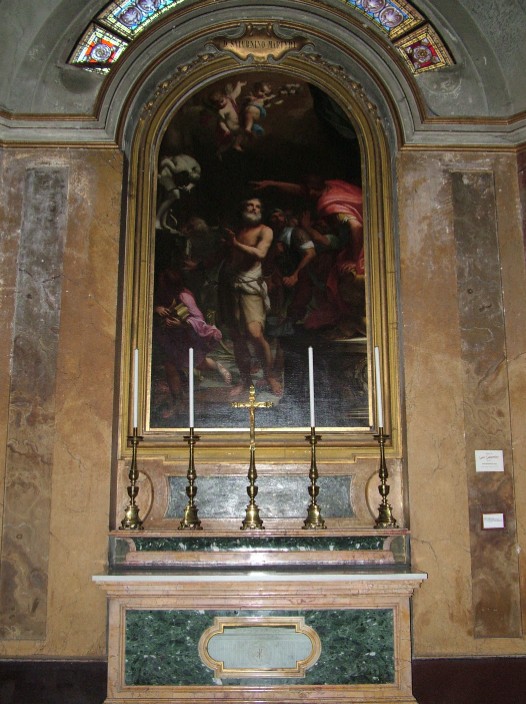
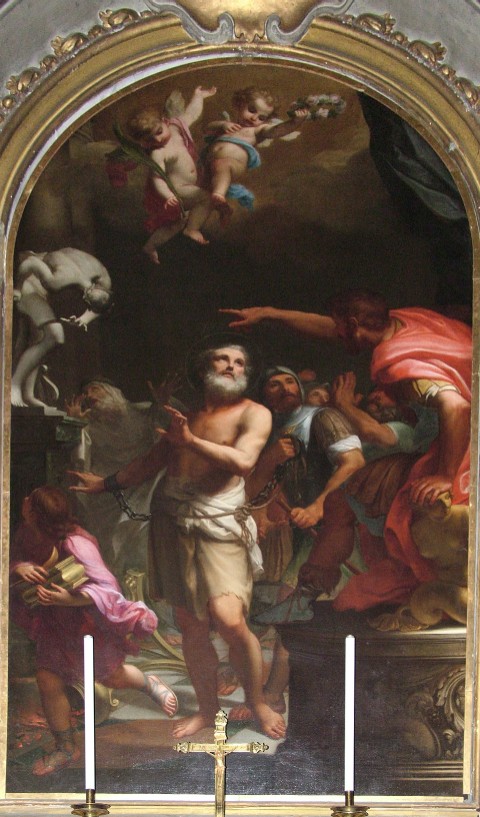
Saint Saturninus of Carthage

Although I posted about him last year, for those of you new to the blog, let me introduce you to a friend of mine.

Today is the feast day of Saint Saturninus of Carthage, Marytr.
(I am not sure if he was a priest or not.)
(Not to be confused with Saint Saturninus of Toulouse, Bishop & Martyr, whose feast is also today.)

There might be more interest in Saint Saturninus of Carthage now because he is in the universal calendar for the extraordinary form of the Mass (he was even in the hybrid Mass Roman Missal of 1964), and the older form of Mass is being said more again.

The old Roman Martyrology has this about Saint Saturninus:
Romæ, via Salaria, natális sanctórum Mártyrum Saturnini senis, et Sisinii Diáconi, sub Maximiáno Príncipe; quos, diu in cárcere maceratos, jussit Urbis Præfectus in equuleum levári et attrahi nervis, fustibus ac scorpiónibus cædi, deínde eis flammas apponi, et, depositos de equuleo, cápite truncari.

At Rome, on the Salarian Way, the birthday of the holy martyr, Saturninus, an aged man, and the deacon Sisinius, in the time of Emperor Maximian. After a long imprisonment, by order of the prefect of the city they were placed on the rack, stretched with ropes, scourged with rods and whips garnished with metal, then exposed to the flames, taken down from the rack and beheaded.
- from breviary.net's Roman Maryrology pages(Sorry, it's a good site for the old martyrology, but the site is run by sedevacantists).

The new (2004) Roman Martyrology has this:
Romæ in cœmetério Trasónis via Salária Nova, sancti Saturníni Carthaginénsis, mártyris, qui, ut sanctus Dámasus papa refert, sub Décio imperatóre pro Christo in pátria in ecúleo impósitus est et Romam extórris missus, ubi, áliis atrócibus torméntis superátis, Gratiánum tyránnum ad fidem convértit et cápite obtruncáto corónam martýrii adéptus est.
(My rough translation)
At Rome, in the cemetary of Trasonis on the New Via Salaria, Saint Saturninus of Carthage, martyr, who, Pope Saint Damasus relates, that under the Emperor Decius, in his homeland he [St. Saturninus] was placed on the rack for Christ, and sent into exile in Rome, where, having overcome other severe tortures, converted the tyrant Gratianus to the faith, and [St. Saturninus] being beheaded obtained the crown of martyrdom.
I'm not sure what happened to St. Saturninus' deacon companion Sisinius in the new Martyrology. I often worry that some parts of legends are automatically thrown out if they can't be proven, rather than keeping them until the can be proven false. That is often the case in the rather snotty comments in the Thurston & Atwater edition of Butler's Lives of the Saints.

Still, the fact of the matter is that Saint Saturninus was martyred in Rome and his remains are at a side altar at the Basilica of Saints John and Paul (the ones menioned in the Roman Canon).


So, while visiting the basilica for the first time back in 2000, I "met" and developed a devotion to this martyr of old age. Again I wish to thank Father Cassian of Norcia for the suggestion to visit this basilica. It really is a hidden treasure that is not on the main tourist circuit.

While digging around on the internet I also found a bit more about him.

A brief article at catholicculture.org had this to say:
St. Saturninus
The Martyrology gives these details: "At Rome on the Via Salaria the death of the holy martyr, the aged Saturninus, and of the deacon Sisinius. Under the emperor Maximianus they suffered long in prison. The prefect of Rome ordered them placed on the rack till their joints were torn loose, then beaten with knotted whips, and burnt with torches; at last removed from the rack, they were beheaded." According to the inscription on his tomb by Pope St. Damasus, Saturninus hailed from Carthage. The Acts of Marcellus say he was condemned as a frail old man to carry sand for the construction of the Baths of Diocletian; but when by his patience and prayer and encouragement he led many to the faith, he was beheaded.

Then I found something really interesting. Saint Saturninus' relics have been kept in the sarcophagus at the Basilica of Saints John and Paul:


I also learned from the sacristan there (thanks to my translator Father Clement of Norcia)that some of the relics were also given to a new parish in Rome named after Saint Saturninus. However, he was originally buried in the Catacombs, and Pope Saint Damasus wrote a beautiful epitaph on his tomb there:

Epigraph of Pope Saint Damasus for St. Saturninus
Citizen now of Christ, formerly of Carthage,
The moment the sword pierced the Mother's holy breast,
through her blood he changed country, name and lineage,
the birth to the life of the saints made him a Roman citizen.
His faith was wonderful: as his heroic death would later show.
His enemy Gratianus trembled while he tore his holy members;
but though all his venomous rage exploded,
he could not induce you, O Saint, to deny Christ;
indeed through your prayers he even deserved to die a Christian.
This is the will of the suppliant Damasus: venerate this tomb!
[Here it is given to fulfil vows and to pour out chaste prayers,
because it is the tomb of the martyr St Saturninus]
To you, O Martyr Saturninus, I pay my prayerful homage.

source

I also found the collect for his feast (which used to be on the universal calendar before the changes of Vatican II) from the traditional Divine Office:
Orémus.
Deus, qui nos beáti Saturníni Mártyris tui concédis natalício pérfrui: eius nos tríbue méritis adiuvári. Per Dóminum nostrum Iesum Christum, qui tecum vivit et regnat in unitáte Spíritus Sancti Deus, per ómnia saécula sæculórum. Amen.

Let us pray.
O God, Who givest us to rejoice in the feast of Thy blessed Martyr Saturninus: grant that we may be helped by his merits. Through our Lord Jesus Christ Thy Son, Who livest and reignest with Thee in the unity of the Holy Spirit, God, forever and ever. Amen.

I have become devoted to him, and love the fact that in spite of his old age he suffered for Christ, to the point of torture, exile, more torture, and martyrdom. He does show that God chooses the weak to shame the strong.


When I was in Rome a few months ago, it was good to visit my old friend again.

Sancte Saturníne (et Sancte Sisinie), ora(te) pro nobis.

"To you, O Martyr Saturninus, I pay my prayerful homage" as well.

And to any priests who are saying the extraordinary form of the Mass and can follow the traditional calendar or who say the ordinary form and have a copy of the Roman Martyrology, I invite you to remember him as well.

(Sorry if this entry is a bit thrown together. Yes, some of it is stolen from last year's entry on Saint Saturninus. However, it's 1:45am here, and the city is using jackhammers about a block away from my apartment to get to a watermain break. Figured I'd get this post up since sleep is not an option at the moment.)

RS

Wednesday, November 28, 2007

The Paperboy.

This is to help Carolina Cannonball with her sanity over a situation at her work. Since she mentioned that someone at her office is hounding her about $6.00, it immediately reminded me of the paperboy in the hilarious 1985 movie "Better Off Dead."

Her situation might be annoying, but you just have to look at it from a different perspective. Just imagine this paper boy any time you hear her want her $6.00.

CC, this one's for you:


(If you haven't seen this movie, you must. It is an 80's classic.)

RS

Punishing myself

Ugh. I slept in so I'm going to have to go to noon Mass at the local life teen parish.

Maybe that will teach me not to be lazy and sleep in.

RS

Franciscan Cardinal

For Carolina Cannonball, and her new "gazing" theme.

"The Grey Cardinal" by Jean Leon Gerome

I just love this picture of all the French royalty bowing down in honor of the little Franciscan Cardinal, who is completely unphased by all the pomp.

RS

Monday, November 26, 2007

Advent betting pool and other rants.

OK, here's the bet:

Next Sunday is the First Sunday of Advent.
I wonder what percentage of Roman Catholic parishes in North America (if not the world) will have an entrance hymn (or it could be used elsewhere in Mass) of "O Come, O Come, Emmanuel."

I only bring this up, because really, this song is appropriate for the time from December 17th until Chistmas. The lyrics of the song are based on the "Great O Antiphons" of the Divine Office, which are only used on those days. Really, this song is inappropriate for the first two and a half weeks of Lent. However, for some reason, just because it is listed under "Advent" in most hymnals, those in charge of planning liturgy just automatically use it. I think I have heard this every 1st Sunday of Advent for as long as I can remember.

One thing that needs to be done more, is that we need to understand the liturgy itself and the music chosen. Choosing "O Come, O Come, Emmanuel" before December 17th, usually shows a lack of study or understanding of the song and the liturgical season.

It's like the equivalent of the "Mass of Creation" for Advent. You ALWAYS hear it, especially on the First Sunday of Advent.

I'm guessing if you called Vegas they would have pretty high odds on it happening.

Maybe I'll set up a poll for next Sunday, just to see if I can get a rough estimate.

Another thing. Advent wreaths are not required for Advent.

Contrary to what the almighty TV tells you, the Christmas Season does not start until December 25th. AND the Christmas Season does not end on December 25th. It goes from Christmas Day until the Baptism of the Lord (about a week into January).


RS

Sunday, November 25, 2007

How people get here, episode 112507

Time for another round of how people got to my site:

"theology of mt. everest"
Never had Mt. Everest in the list of Catholic holy mountains. Mount Sinai, Mount Tabor, Mount Zion, and the hill of Golgotha are the top contenders there.

"pope marini"
Woah. If that is P. Marini, that would scare the crap out of me. Thankfully, there were no results for that specific combination, just those words appearing seperately.

"leaving Catholic church"
If you're considering it ... DON'T DO IT!

"byzantine benedictine oblate"
Most Byzantine monks will follow the Rule of Saint Basil. However, I am aware of one Eastern rite monastery which follows the Rule of Saint Benedict: Holy Transfiguration Skete: Society of Saint John You might contact them and ask them if they have oblates.

"goofy song lyrics lets goof around"
Sorry, no life-teen stuff here.

RS

Friday, November 23, 2007

Plenary Indulgence on Christ the King

Just a reminder that you can help a soul in purgatory this Sunday.

Requirements for Obtaining a Plenary Indulgence on Christ the King

- Public recitation of the prayer “Most Sweet Jesus, Redeemer - Act of Dedication of the Human Race to Jesus Christ King” (listed below)

- Say one “Our Father” and one “Hail Mary” for the intentions of the Pope

- Make a Sacramental Confession within about a week of (before or after) the Feast of Christ the King

- Worthily receive Holy Communion (ideally on the Feast of Christ the King)

- that one be free from all attachment to sin, even venial sin.
(For a better understanding of this one, see this excellent article by Fr. Tim Finigan: "Plenary indulgences not impossible")


Most Sweet Jesus, Redeemer - Act of Dedication of the Human Race to Jesus Christ the King

Most Sweet Jesus, Redeemer of the human race, look down upon us humbly prostrate before You. We are Yours, and Yours we wish to be; but to be more surely united with You, behold each one of us freely consecrates himself today to Your Most Sacred Heart. Many indeed have never known You; many, too, despising Your precepts, have rejected You. Have mercy on them all, most merciful Jesus, and draw them to Your Sacred Heart.

Be King, O Lord, not only of the faithful who have never forsaken You, but also of the prodigal children who have abandoned You; grant that they may quickly return to their Father’s house, lest they die of wretchedness and hunger.

Be King of those who are deceived by erroneous opinions, or whom discord keeps aloof, and call them back to the harbor of Truth and the unity of Faith, so that soon there may be but one flock and one Shepherd.

Grant, O Lord, to Your Church assurance of freedom and immunity from harm; give tranquility of order to all nations; make the earth resound from pole to pole with one cry: Praise to the Divine Heart that wrought our salvation; to It be glory and honor forever. Amen.


The “Technical” Stuff

“1. An indulgence is the remission in the eyes of God of the temporal punishment due to sins whose culpable element has already been taken away. The Christian faithful who are rightly disposed and observe the definite, prescribed conditions gain this remission through the effective assistance of the Church, which, as the minister of redemption, authoritatively distributes and applies the treasury of the expiatory works of Christ and the Saints.”
- Handbook of Indulgences, Norms

“22. The prescribed work for gaining a plenary indulgence attached to a church or oratory is a devout visit there, which includes the recitation of the Lord’s Prayer and the Creed (Pater Noster and Credo), unless otherwise stated in a specific grant.”
- Handbook of Indulgences, Norms

“23. 1. Besides the exclusion of all attachment to sin, even venial sin, the requirements for gaining a Plenary Indulgence are the performance of the indulgenced work and fulfillment of three conditions: Sacramental Confession, Eucharistic Communion, and prayer for the Pope’s intentions.
2. Several Plenary Indulgences may be gained on the basis of a single Sacramental Confession; only one may be gained, however, on the basis of a single Eucharistic Communion and prayer for the Pope’s intentions.
3. The three conditions may be carried out several days preceding or following performance of the prescribed work. But it is more fitting that the Communion and the prayer for the Pope’s intentions take place on the day the work is performed.
4. If a person is not fully disposed or if the prescribed work and the three mentioned conditions are not fulfilled, the Indulgence will only be partial ...”
5. The condition requiring prayer for the Pope’s intentions is satisfied by reciting once the Our Father and Hail Mary for his intentions (Pater Noster and Ave Maria); nevertheless all the faithful have the option of reciting any other prayer suited to their own piety and devotion.”
- Handbook of Indulgences, Norms

Grants:
#27. A plenary indulgence is granted to the faithful, who piously recite the above Act of Dedication of the Human Race to Jesus Christ the King, if it is recited publicly on the feast of our Lord Jesus Christ the King, and piously carry out the precepts in Norm #23 listed above.
- Handbook of Indulgences, Grants

Solemnity of Christ the King - Comparison of Prayers

Christ the King

Solemnity of Christ the King (from the 2002 Missale Romanum)

Collect (Opening Prayer)

Official Latin from the 1969 & 2002 Roman Missals
Orémus. Omnípotens sempitérne Deus, qui in dilécto Fílio tuo, universórum Rege, ómina instauráre voluísti, concéde propítius, ut tota creatúra, a servitúte liberáta, tuæ maiestáti desérviat ac te sine fine colláudet.
Per Dóminum nostrum Iesum Christum, Fílium tuum, qui tecum vivit et regnat in unitáte Spíritus Sancti, Deus, per ómnia saécula sæculórum.

Official 1973 I.C.E.L. Translation (Used at Mass in English)
Let us pray. Almighty and merciful, you break the power of evil and make all things new in your Son, Jesus Christ, the King of the universe. May all in heaven and earth acclaim your glory and never cease to praise you.
We ask this through our Lord Jesus Christ, your Son, who lives and reigns with you and the Holy Spirit, one God, for ever and ever.

My Own Literal Translation
Let us pray. Almighty and Eternal God, Who wished to restore all things in Your Beloved Son, the King of the universe, graciously grant, that all creatures, having been freed from slavery, may zealously serve Your Majesty and praise You without end.
Through our Lord Jesus Christ, Your Son, Who lives and reigns with You, in the unity of the Holy Spirit, one God, forever and ever.

Prayer Over the Gifts

Official Latin from the 1969 & 2002 Roman Missals
Hóstiam tibi, Dómine, humánæ reconciliatiónis offeréntes, supplíciter deprecámur, ut ipse Fílius tuus cunctis géntibus unitátis et pacis dona concédat.
Qui vivit et regnat in saécula sæculórum.

Official 1973 I.C.E.L. Translation (Used at Mass in English)
Lord, we offer you the sacrifice by which your Son reconciles mankind. May it bring unity and peace to the world.
We ask this through Christ our Lord.

My Own Literal Translation
Offering to You, O Lord, this Victim of man’s reconciliation, we humbly beseech You, that Your Son Himself may grant the gifts of unity and peace to all peoples.
He Who lives and reigns forever and ever.

Preface
Preface of Christ, the King of the Universe

Official Latin from the 1969 & 2002 Roman Missals
Vere dignum et iustum est, æquum et salutáre, nos tibi semper et ubíque grátias ágere: Dómine, sancte Pater, omnípotens ætérne Deus:
Qui Unigénitum Fílium tuum, Dóminum nostrum Iesum Christum, Sacerdótem ætérnum et universórum Regem, óleo exsultatiónis unxísti:
ut, seípsum in ara crucis hóstiam immaculátam et pacíficam ófferens, redemptiónis humánæ sacraménta perágeret: et, suo subiéctis império ómnibus creatúris, ætérnum et universále regnum imménsæ tuæ tráderet maiestáti: regnum veritátis et vitæ; regnum sanctitátis et grátiæ; regnum iustítiæ, amóris et pacis.
Et ídeo cum Angelis et Archángelis, cum Thronis et Dominatiónibus, cumque omni milítia cæléstis exércitus, hymnum glóriæ tuæ cánimus, sine fine dicéntes:
Sanctus, Sanctus, Sanctus ...

Official 1973 I.C.E.L. Translation (Used at Mass in English)
Father, all-powerful and ever-living God, we do well always and everywhere to give you thanks.

You anointed Jesus Christ, your only Son, with the oil of gladness, as the eternal high priest and universal king.

As priest he offered his life on the altar of the cross and redeemed the human race by this one perfect sacrifice of peace. As king he claims dominion over all creation that he may present to you, his almighty Father, an eternal and universal kingdom: a kingdom of truth and life, a kingdom of holiness and grace, a kingdom of justice, love, and peace.
And so, with all the choirs of angels in heaven we proclaim your glory and join in their unending hymn of praise:
Holy, holy, holy ...

My Own Literal Translation
It is truly right and just, proper and availing unto salvation, that we always and everywhere give thanks to You, O Lord, Holy Father, Almighty and Eternal God;
Who anointed with the oil of exultation Your only-Begotten Son, our Lord Jesus Christ, as the Eternal Priest and King of the universe:
so that, offering Himself on the Altar of the Cross as an immaculate and pacifying Victim, to carry out the Sacrament of mankind’s redemption: and thus, with all creatures subject to His rule, He might hand over to Your infinite Majesty an eternal and universal Kingdom: a Kingdom of truth and of life; a Kingdom of sanctity and grace; a Kingdom of justice, love, and peace.
And so, with the Angels and Archangels, with the Thrones and Dominations, and with all the host of the Heavenly army, we sing the hymn of Your Glory, saying without end:
Holy, Holy, Holy ...

Post-Communion Prayer

Official Latin from the 1969 & 2002 Roman Missals
Orémus. Immortalitátis alimóniam consecúti, quaésumus, Dómine, ut, qui Christi Regis universórum gloriámur obœdíre mandátis, cum ipso in cælésti regno sine fine vívere valeámus.
Qui vivit et regnat in saécula sæculórum.

Official 1973 I.C.E.L. Translation (Used at Mass in English)
Let us pray. Lord, you give us Christ, the King of all creation, as food for everlasting life. Help us to live by his gospel and bring us to the joy of his kingdom,
where he lives and reigns for ever and ever.

My Own Literal Translation
Let us pray. Having received the Food of immortality, we beseech You, O Lord, that, we who glory in being obedient to the commands of Christ, King of the universe, may be worthy to live with Him in His Heavenly Kingdom without end.
He Who lives and reigns forever and ever.

RS

Thursday, November 22, 2007

Happy Thanksgiving

Here's the music of the traditional chant of thanksgiving, the Te Deum. This is the simple tone:

click picture to enlarge


Have a happy Thanksgiving, and don't end up like the pictures in the post below!

RS

Wednesday, November 21, 2007

Gluttony: A meditation before Thanksgiving Dinner

.
Article ----> Gluttony by Christine Fletcher
(In case you get distracted by all the pictures)

Gluttony?
even wearing a safety helmet, do not try this

No, I'm not trying to ruin your Thanksgiving Dinner tomorrow. There's nothing wrong with preparing a nice meal and making sure all the particulars are well taken care of ... as long as you don't obsess (or excess) about it. As long as tomorrow is a day in which we do thank God for all He has given to us, don't become scrupulous over what you might read in the linked article at the end of the post.

Fox channel's annual "Glutton Bowl"
(shown on Thanksgiving Day)

Anyway, I found a really good post regarding guttony. The interesting thing is that in many places in today's world, we don't necessarily suffer from the "traditional" idea gluttony of just eating and eating without reason. We are becoming more conscious about how much we are eating. A more subtile form of gluttony is what is referred to as "gluttony of delicacy." Another way of saying it is that we are often way too picky about what we eat.

Record breaking hamburger (over 100 lbs).

This article by Christine Fletcher is an excellent analysis of gluttony and its different forms. I recommend a full reading of it. And I figured I'd post it today to give you a better chance of getting around to read it since tomorrow will probably be busy for those in the U.S. who celebrate Thanksgiving.

Article ----> Gluttony by Christine Fletcher
(Don't get all distracted by the pictures now!)

(Funny, after I read the article, suddenly when I'd got to other sites, food advertisements started showing up in the pages' advertising sections ... the first advertisement was for McDonalds. Guess my computer has been having too many "cookies.")

A 100x100 In & Out Burger (100 patties and 100 slices of cheese). Calorie count: over 19,490 Calories. Full story here: In-N-Out 100x100

I'm hungry, think I'll go get something to eat. :P


Article ----> Gluttony by Christine Fletcher
(In case you got distracted by all the pictures)

RS

Tuesday, November 20, 2007

Some fruits of Summorum Pontificum

O wow, this is great!

I just saw a post over at The New Liturgical Movement that had me elated.

Several years ago, while in Rome, I had met a few monks from the monastery at Le Barroux. These guys were great monks and priests. In one of our conversations, a friend and I had asked them if they had ever said Mass at the Basilica of Saint Peter. They lamented that because they say Mass according to the 1962 Missal, they were forbidden by the rector of the basilica at the time. I had mentioned this to another friend who was a priest in Rome and he confirmed that this was indeed the situation.

So, it was with great joy that I just saw some pictures of the CIEL in Rome, one of which was this picture of the Abbot of Le Barroux, Dom Louis Marie, saying Mass at the tomb of Bl. John XXIII!


This really made my day!

Check out the link below at The New Liturgical movement for more pictures of traditional Latin Masses in Rome.

First Images From CIEL in Rome

EDIT - Pics came from the the blog Orbis Catholicus. Go there for even more pictures. (Sorry, I can only link to the blog because there are too many individual posts to link to.)

RS

Monday, November 19, 2007

Well, since you put it that way ...

Are we humans THAT gross?

It's been awhile since the last Monday levity.

Funny story in a "Hitchhikers Guide to the Galaxy" sort of way.

The original short story is by Terry Bisson, which won some type of short story sci-fi award.

"They're Made Out Of Meat"

I found out about it because someone made it into a short film, which also won an award.
I like the setting into which they put the story. The whole visualization is good. I just wish they hadn't cut out some of the lines from the story though. Still it is surreal-y funny:

(WARNING - one quick cuss word (an f-bomb) in film)


(I don't know why, but the only thing I would have added was a monkey for the guy in red. He just looks like he should have one.)

RS

Saturday, November 17, 2007

How people get here: Round 111707

How some people end up at my blog:

by searching for:

-"purple vestments november"
Yes, remember, the color for Advent is violet (purple). Although in Advent you can use the bluer hues of violet, it still must be violet. Blue is not a liturgical color in the Roman Rite. Marian feasts are white. You may have some blue on a Marian vestment, but it should be obvious that the vestment is a white vestment. I mean, choosing blue vestments (and other hideous vestments) for the pope might be why Archbishop P. Marini got canned from being the Papal M.C. It might not be the reason, but it is interesting that right after P. Marini chose some hideous blue and yellow vestments for the pope, soon afterwards he was replaced by Msgr. G. Marini as Papal M.C.

-"ronald mc donald kill"
Not sure what this person was looking for. LOL.

-"Gloria in Excelsis Deo en power point"
One of the more interesting searches for prayers I've seen. Made me wonder, what happens when Windows meets Mass? Then I though, "it's obvious, that's how we get the blue vestments in Advent." It's the equivalent of a "blue screen of death" in windows: it's something that shouldn't happen and ruins whatever is currently going on.

-"breaking open the word for 32 sunday of ordinary time 2007"
Must be looking for something specific, since I've never really heard interpreting scripture being referred to as "breaking open the word."

-"the end of the world"
I can be negative sometimes, but I don't think I'm necessarily apocalyptic. (Actually my site popped up because of a story I had on the Large Hadron Collider in Switzerland)

-"autobiography of Saint Benedict"
There's not an autobiography of Saint Benedict of Nursia. The closest thing would be his Rule for Monks (aka the Rule of Saint Benedict). The best information we have about his life is from Saint Gregory the Great in the Second Book of the Dialogues.

I'm not trying to make fun of what people search for, I am just entrigued not only at what terms people use in a search, but also by how search engines will end up listing my blog for something completely unrelated to my "theme." I also would like to try and answer or comment on some questions that might need to be addressed, eg that "purple vestments" question.

RS

Friday, November 16, 2007

33rd Sunday Per Annum - Comparison of Prayers

"Sermon and Deeds of the Antichrist" by Luca Signorelli*
"See that you not be deceived, for many will come in My Name, saying, 'I am He,’ and 'The time has come.’ Do not follow them!" - Luke 21:8

33rd Sunday Per Annum (Ordinary Time)

Collect (Opening Prayer)

Official Latin from the 1969 & 2002 Roman Missals
Orémus. Da nobis, quaésumus, Dómine Deus noster, in tua semper devotióne gaudére, quia perpétua est et plena felícitas, si bonórum ómnium iúgiter serviámus auctóri.
Per Dóminum nostrum Iesum Christum, Fílium tuum, qui tecum vivit et regnat in unitáte Spíritus Sancti, Deus, per ómnia saécula sæculórum.

Official 1973 I.C.E.L. Translation (Used at Mass in English)
Let us pray. Father of all that is good, keep us faithful in serving you, for to serve you is our lasting joy.
We ask this through our Lord Jesus Christ, your Son, who lives and reigns with you and the Holy Spirit, one God, for ever and ever.

My Own Literal Translation
Let us pray. Grant us, we beseech You, O Lord our God, to always be joyful in our devotion to You, which is our perpetual and complete happiness, if we continually serve You, the Author of all good things.
Through our Lord Jesus Christ, Your Son, Who lives and reigns with You, in the unity of the Holy Spirit, one God, forever and ever.

Prayer Over the Gifts

Official Latin from the 1969 & 2002 Roman Missals
Concéde, quaésumus, Dómine, ut óculis tuæ maiestátis munus oblátum et grátiam nobis devotiónis obtíneat, et efféctum beátæ perennitátis acquírat.
Per Christum Dóminum nostrum.

Official 1973 I.C.E.L. Translation (Used at Mass in English)
Lord God, may the gifts we offer increase our love for you and bring us to eternal life.
We ask this in the name of Jesus the Lord.

My Own Literal Translation
Grant, we beseech You, O Lord, that this service offered in the sight of Your Majesty may both obtain for us the grace of devotion, and acquire for us the reward of a blessed eternity.
Through Christ our Lord.

Post-Communion Prayer

Official Latin from the 1969 & 2002 Roman Missals
Orémus. Súmpsimus, Dómine, sacri dona mystérii, humíliter deprecántes, ut, quæ in sui commemoratiónem nos Fílius tuus fácere præcépit, in nostræ profíciant caritátis augméntum.
Per Christum Dóminum nostrum.

Official 1973 I.C.E.L. Translation (Used at Mass in English)
Let us pray. Father, may we grow in love by the eucharist we have celebrated in memory of the Lord Jesus,
who is Lord for ever and ever.

My Own Literal Translation
Let us pray O Lord, we have consumed the Gifts of this Sacred Mystery, humbly praying, that, those things which Your Son has commanded us to do in His remembrance, may be a help in the increasing of our charity.
Through Christ our Lord.

*This fresco is in a side chapel in the Cathedral at Orvieto, Italy. I have seen it both in 1993 and 2005. The entire chapel is beautifully done by Luca Signorelli. It is a chapel that definitely makes you think about death, judgement, Heaven, and Hell.

RS