Friday, May 30, 2008

9th Sunday Per Annum - Comparison of Prayers

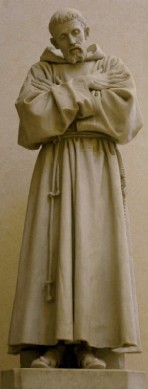
Saint Longinus, the Roman soldier who pierced Christ's Sacred Heart

9th Sunday "Per Annum," aka the 9th Sunday of Ordinary Time, aka the Sunday most rarely seen in the United States.

This is a prayer I have never had to translate until this year. I'm not even sure if Fr. Z has covered this prayer in all his years of "What Does the Prayer Really Say."

And what's up with that ICEL translation of the Collect?

Collect (Opening Prayer)

Official Latin from the 1969 & 2002 Roman Missals
Orémus. Deus, cuius providéntia in sui dispositióne non fállitur, te súpplices exorámus, ut nóxia cuncta submóveas, et ómnia nobis profutúra concédas.
Per Dóminum nostrum Iesum Christum, Fílium tuum, qui tecum vivit et regnat in unitáte Spíritus Sancti, Deus, per ómnia saécula sæculórum.

Official 1973 I.C.E.L. Translation (Used at Mass in English)
Let us pray. Father, your love never fails. Hear our call. Keep us from danger and provide for all our needs.
Grant this through our Lord Jesus Christ, your Son, who lives and reigns with you and the Holy Spirit, one God, for ever and ever.

My Own Literal Translation
Let us pray. O God, Whose Providence is not mistaken in Your ordering of things, we humbly beg You, that You may dispel all offenses, and grant to us all things beneficial.
Through our Lord Jesus Christ, Your Son, Who lives and reigns with You, in the unity of the Holy Spirit, one God, forever and ever.

Prayer Over the Gifts

Official Latin from the 1969 & 2002 Roman Missals
In tua pietáte confidéntes, Dómine, cum munéribus ad altária veneránda concúrrimus, ut, tua purificánte nos grátia, iísdem quibus famulámur mystériis emundémur.
Per Christum Dóminum nostum.

Official 1973 I.C.E.L. Translation (Used at Mass in English)
Lord, as we gather to offer our gifts confident in your love, make us holy by sharing your life with us and by this eucharist forgive our sins.
We ask this through Christ our Lord.

My Own Literal Translation
Trusting in Your merciful love, O Lord, with gifts we assemble at the worthy altar of veneration, so that by purifying us with Your grace, we may give service by the same Mystery by which we may be fully cleansed.
Through Christ our Lord.

Post-Communion Prayer

Official Latin from the 1969 & 2002 Roman Missals
Orémus. Rege nos Spíritu tuo, quaésumus, Dómine, quos pascis Fílii tui Córpore et Sánguine, ut te, non solum verbo neque lingua, sed ópere et veritáte confiténtes, intráre mereámur in regnum cælórum.
Per Christum Dóminum nostum.

Official 1973 I.C.E.L. Translation (Used at Mass in English)
Let us pray. Lord, as you give us the body and blood of your Son, guide us with your Spirit that we may honor you not only with our lips, but also with the lives we lead, and so enter your kingdom.
We ask this in the name of Jesus the Lord.

My Own Literal Translation
Orémus. We beseech You, O Lord, by Your Spirit rule us, whom You nourish with the Body and Blood of Your Son, so that, confessing You, not only by word or tongue, but also in deed and in truth, we may be made worthy to enter into Your heavenly Kingdom.
Through Christ our Lord.

RS

Friday, May 23, 2008

Most Holy Body and Blood of Jesus Christ - Comparison of Prayers

Pope John Paul II in the Corpus Christi procession in Rome in 2001
(yes, that's how close I was to Our Lord and His Vicar!)

On the liturgical calendar, this Sunday will be the two year anniversary of this blog. Although two years ago, Corpus Christi was a couple of weeks later, so the actual anniversary is not quit here.

This is another one of those frustrating feasts, in the sense that, so many bishops transfer the feast. Here in the United States the feast is perpetually transferred to the following Sunday. I'm not sure if this is the same in the Extraordinary Form or not. I have heard that if something is transferred in the Ordinary Form, then it is also transferred in the Extraordinary form, but I'm not sure if that is true, and if that would apply in this instance since TECHNICALLY the Feast in the Extraordinary Form is the Body of Christ and the Feast in the Ordinary Form is the Body and Blood of Christ. Although I think part of the transfer also has to do with whether a diocese has removed the obligation from the day, in which case it is tranferred to the Sunday.

Grrrrrr! It's all so confusing. So much for Vatican II's simplifying of the rite. And when so many of the faithful are begging for things to be returned to the more traditional way. How this benefits the faithful, I have no idea, because all I see is that people aren't having to make any effort in their faith anymore.

Anyway, on to the comparison of prayers.

Notice how at the end of the Collect and the Prayer after Communion, Christ no longer "reigns" in the I.C.E.L. translation.

Collect (Opening Prayer)

Official Latin from the 1969 & 2002 Roman Missals
Orémus. Deus, qui nobis sub sacraménto mirábili passiónis tuæ memóriam reliquísti, tríbue, quaésumus, ita nos Córporis et Sánguinis tui sacra mystéria venerári, ut redemptiónis tuæ fructum in nobis iúgiter sentiámus.
Qui vivis et regnas cum Deo Patre in unitáte Spíritus Sancti, Deus, per ómnia saécula sæculórum.

Official 1973 I.C.E.L. Translation (Used at Mass in English)
Let us pray. Lord Jesus Christ, you gave us the eucharist as the memorial of your suffering and death. May our worship of this sacrament of your body and blood help us to experience the salvation you won for us and the peace of the kingdom
where you live with the Father and the Holy Spirit, one God, for ever and ever.

My Own Literal Translation
Let us pray. O God, Who under this wondrous Sacrament, left to us a Memorial of Your Passion, grant, we beseech You, so as to venerate the Sacred Mysteries of Your Body and Blood, that we may constantly experience the fruit of Your Redemption.
You Who lives and reigns with God the Father in the unity of the Holy Spirit, one God, forever and ever.

Prayer Over the Gifts

Official Latin from the 1969 & 2002 Roman Missals
Ecclésiæ tuæ, quaésumus, Dómine, unitátis et pacis propítius dona concéde, quæ sub oblátis munéribus mýstice designántur.
Per Christum Dóminum nostrum.

Official 1973 I.C.E.L. Translation (Used at Mass in English)
Lord, may the bread and cup we offer bring your Church the unity and peace they signify.
We ask this in the name of Jesus the Lord.

My Own Literal Translation
O Lord, we humbly beseech You, graciously grant to Your Church the gifts of unity and peace, which are mystically represented under these sacrificial offerings.
Through Christ our Lord.

Preface
Preface II of the Most Holy Eucharist - On the fruits of the Most Holy Eucharist

Official Latin from the 1969 & 2002 Roman Missals
Vere dignum et iustum est, æquum et salutáre, nos tibi semper et ubíque grátias ágere: Dómine, sancte Pater, omnípotens ætérne Deus: per Christum Dóminum nostrum.
Qui cum Apóstolis suis in novíssima cena convéscens, salutíferam crucis memóriam prosecutúrus in saécula, Agnum sine mácula se tibi óbtulit, perféctæ laudis munus accéptum.
Quo venerábili mystério fidéles tuos aléndo sanctíficas, ut humánum genus, quod cóntinet unus orbis, una fides illúminet, cáritas una coniúngat.
Ad mensam ígitur accédimus tam mirábilis sacraménti, ut, grátiæ tuæ suavitáte perfúsi, ad cæléstis formæ imáginem transeámus.
Propter quod cæléstia tibi atque terréstria cánticum novum cóncinunt adorándo, et nos cum omni exércitu Angelórum proclamámus, sine fine dicéntes:
Sanctus, Sanctus, Sanctus ...

Official 1973 I.C.E.L. Translation (Used at Mass in English)
Father, all-powerful and ever-living God, we do well always and everywhere to give you thanks through Jesus Christ our Lord.
At the last supper, as he sat at table with his apostles, he offered himself to you as the spotless lamb, the acceptable gift that gives you perfect praise. Christ has given us this memorial of his passion to bring us its saving power until the end of time.
In this great sacrament you feed your people and strengthen them in holiness, so that the family of mankind may come to walk in the light of one faith, in one communion of love.
We come then to this wonderful sacrament to be fed at your table and grow into the likeness of the risen Christ.
Earth unites with heaven to sing the new song of creation as we adore and praise you for ever:
Holy, holy, holy ...

My Own Literal Translation
It is truly right and just, proper and availing unto salvation, that we always and everywhere give thanks to You, O Lord, Holy Father, Almighty and Eternal God: through Christ our Lord.
Who, when eating the last supper with His Apostles, and about to carry out the saving Memorial of the Cross for all ages, a Lamb without blemish He offered to You Himself, the acceptable Sacrifice of perfect praise.
You sanctify by this venerable Mystery nourishing Your faithful, so that one world contains, one faith enlightens, and one love joins together the human race.
Therefore we now approach the table of so wonderful a Sacrament, so that, having been filled with the sweetness of Your Grace, we may be transformed into the image of the Divine Form.
Thus, the Heavens and the earth, adoring, sing together to You a new song, and with all the armies of Angels, we proclaim, saying without end:
Holy, Holy, Holy ...

Post-Communion Prayer

Official Latin from the 1969 & 2002 Roman Missals
Orémus. Fac nos, quaésumus, Dómine, divinitátis tuæ sempitérna fruitióne repléri, quam pretiósi Córporis et Sánguinis tui temporális percéptio præfigúrat.
Qui vivis et regnas in saécula sæculórum.

Official 1973 I.C.E.L. Translation (Used at Mass in English)
Let us pray. Lord Jesus Christ, you give us your body and blood in the eucharist as a sign that even now we share your life. May we come to possess it completely in the kingdom
where you live for ever and ever.

My Own Literal Translation
Let us pray. Make us, we beseech You, O Lord, to be filled with the everlasting possession of Your Divinity, Which is prefigured by our present receiving of Your Precious Body and Blood.
You Who lives and reigns forever and ever.

The Church recommends that a Eucharistic procession be held after (one of) the Mass(es) on this day.

If your parish does not have one, your should encourage your pastor to do it next year. In Rome on this Solemnity (which is still on the proper Thursday) there is a HUGE procession from Saint John Lateran (the Pope's Cathedral) down to Santa Maria Maggiore. I think the route is about 1 kilometer long, and the procession of people ends up being about that long too. By the end, the entire piazza and streets surrounding Santa Maria Maggiore are completely packed.

RS

Sant'Eutizio Monastery and Church

Today, May 23rd, is the Feast of Saint's Eutizio, Spes, and Fiorenzo. I affectionately refer to these three as the Grandfathers of Western Monasticism since they would have had an influence on Saint Benedict, the Father of Western Monasticism, and Saint Scholastica. You can read about Sant'Eutizio, San Spes, and San Fiorenzo in my post from last year, here:

Feast of Saint Eutizio, Saint Fiorenzo, and Saint Spes

As I noted at the end of that post, I was disappointed that I did not have any pictures of my own from the monastery of Sant'Eutizio. Thankfully, that has changed. Last year, when I went to Norcia, Father Clement (who is now the pastor at Sant'Eutizio, which is now a parish) was kind enough to drive me there. It was a beautiful day and thankfully the church was open.

As a small historical note, the monastery of Sant'Eutizio was a rather important monastery back in the Middle Ages. It was related to the Monastery in Norcia, but apparently, Sant'Eutizio also had a lot of power back then. From what I was told, it controlled monasteries all the way to the western coast of Italy. Eventually it was abandoned when Napoleon came through Italy and kicked all the religious out of their monasteries and religious houses. This is why so many churches and monasteries in Italy are controlled or owned by the state.

Fortunately the diocese, and not the state, actually owns this land. The monastery has been used as a retreat center and the church is now a parish for the surrounding area. However, last year, the archbishop appropriately assigned one of the monks of Norcia as the pastor of the parish there.

I do love the place. A great memory was the first time I went to Norcia in 2000, Fr. Cassian, Fr. (then Br.) Clement, and I went to Sant'Eutizio and chanted the traditional Benedictine Vepsers in the choir in the church. It was a rather amazing experience.

Now back to last year's trip. First we had to get to Sant'Eutizio from Norcia. The drive there is about 15 minutes of amazing scenery around Norcia. You end up going over a pass "behind" Norcia and then into a valley area. There are about three or four little towns on the way to Sant'Eutizio. I'm always amazed at how some of the towns are just stuck on the side of a hill or mountain. Here's an example. I believe this is the small town of Piedivalle.


Eventually we leave the main road in the valley and head up to the monastery. Just above the monastery, again stuck to the side of the mountain, is Preci. I'm not sure if this is Preci proper, or just a small "upper part" of it. This is the view of it from the monastery.


Turning around we see the entrance to the monastery.


Which opens into the inner courtyard with the church to the right.


Inside the church, you can see an amazingly beautiful design where the high altar and choir are placed above the main level of the church.


Here we see the main altar, the crucifix and two busts of Sant'Eutizio and San Spes.


Going behind the altar we come into the choir and on the backside of the high altar area we see the reliquary.


The signs tells us (one in Italian and one in English) "Here rests the bodies of Sant'Eutizio and San Spes, Abbots, whose acts were written about by Pope Saint Gregory [the Great]."


Here's the choir I mentioned above. It's all woodwork, and although it's a bit hard to tell, there are actually two levels of choir stalls there.


Going outside we can see the bell tower built into the cliffside.


Turning to the right, we are looking at the facade of the church with a beautiful Romanesque rose window.


Just to get your bearings, here's the facade of the church and you can see the entrance to the monastery which we came through to the right.


Turning around and going up the side of the hill, we come to the cave where Sant'Eutizio lived.


And finally, after we leave and drive back towards Norcia, we come up over the pass and are able to look out upon Norcia itself.


So, I hope you enjoyed this little virtual tour of Sant'Eutizio and hope you feel a bit closer to them. They may be unknown, but in God's Providence, they have actually had a huge influence upon religious life in the West. If you don't know much about them, please read last year's post.

"Saint Spes and Saint Eutizio with Christ"

Saint Fiorenzo of Preci

I'm hoping that my friends at Norcia can help me learn more about these Saints.

RS

Wednesday, May 21, 2008

Ecclesiastical Latin Pronunciation Guide for United States English Speakers

Inscription at the base of the oblisk in the Piazza of St. Peter's

I've debated putting this up, but I have had several people say they found this helpful, and encouraged me to post it.

I'm sure this would make any Ecclesial Latin scholar cringe, but if this helps, then it can't be that bad ... right? I'll note that I learned most of my Latin pronunciation in Rome, since there are actually different "accents" too. The French pronunciations (or accent?) of Latin are noticeably different IMHO. And as for classical Latin pronunciation, that is VERY different.

I also did not bother with long or short vowels, mainly because when singing or chanting, the vowels are usually made long anyway for rhythmic purposes (at least in the way I learned chant).

Realize though that this isn't the most scholarly listing, but I do hope it helps people understand pronunciations better. If this helps, please let me know in the comments. Or if you see any major problems, also let me know.

Ecclesiastical Latin pronunciations

letters
A - sounds like “ah” as in “balm”
B - same as English
C - sounds like “ch” as in “cello” when followed by letters “e” or “i” or the dipthong “æ”, sounds like a hard “k” as in “calendar” when followed by “a,” “o,” or “u”
D - same as English
E - sounds like “eh” as in “dell”
F - same as English
G - soft like “j” as in “gel” when followed by letters “e” or “i”, sounds like a hard “g” as in “gum” when followed by “a,” “o,” or “u”, except when followed by “n” in which case it is a dipthong (see below)
H - sounds like h as in “horse”
I - sounds like “ee” as in “bring” unless followed by “u” in which it is a dipthong (see below)
J - not used except in later Latin, often replaced the “i” in the dipthong “iu” (see below)
K - a rather rare Latin letter from the oldest time of the language and pretty much disappeared, sounds like a hard “c” as in “Kalends”
L - same as English (two “L”’s also sound like an “L” in English)
M - same as English
N - same as English except when with a “g” as in the dipthong “gn” (see below)
O - sounds like “oh” as in “open”
P - same as English
Q - always followed by a “u” as in the English dipthong “qu” and sounds same as English as in “quick”
R - lightly trilled as in Spanish or Italian
S - sounds like “s” in “snake”
T - always hard as in “town” unless in dipthong “ti” when when followed by a vowel (see below)
U - sounds like “oo” as in “soup”
V - sounds like “v” as in “volume” (although sometimes this also represents the letter “u” in some older scripts, but this rarely happens in Ecclesial Latin texts)
W - does not exist in Latin except in foreign words
X - sounds like “kz” as in “approximate” and “rex” and “exist”
Y - rarely used (comes from the Greek), usually sounds like “ee”
Z - sounds like “z” as in “zebra”

dipthongs
æ or ae - sounds like “ay” as in cælum (Chay’ - loom)
au - sounds like “ow” or the “ou” in “ouch”
œ or oe - sounds like “ay” is basically an older form of the dipthong “æ”
iu or ju - sounds like “yoo” as in the Latin word “justítia” (yoo - stee’ - tzee - aah)
gu - sounds like “gw” as in “sánguine” when followed by a vowel, or “goo” as in “gulag” when followed by a consonant
gn - sounds like a Spanish “ñ” as in “agnus” (ah’ - nyoos)
ti - sounds hard like “tee” when followed by either consonants or followed by nothing, sounds soft like the z’s in pizza when followed by a vowel
sc - sounds like a soft “sh” when followed by “e” or “i” or sounds like a hard “sk” when followed by “a,” “o,” or “u”

accent marks
accent marks are very important (especially in Gregorian Chant) and will usually be written if there are more than two syllables in a word. If the word is a two syllable word, the accent is always on the first syllable unless otherwise noted.

syllables
all syllables (vowels) are pronounced unless they are a dipthong, care should be used to avoid slurring vowels together.
For example:
“Fílii” is pronounced “Fee’ - lee - ee” not “feely”
“puer” is pronounced “poo’ - air” not “pwer”
“suáve” is pronounced “soo - ah’ - vay,” not “swav-ay”
“pius” is pronounced “pee’ - oohs“ not “pyus“
“refúgium” is pronounced “ray - foo’ - jee - oom” not “ray - foo - jum”
“tuum” is prounced “too’ - oom” not “toom”

RS

Tuesday, May 20, 2008

Mmmm ... mmmm ... good!

Wow, I have got to make a road trip. I already love bacon. It's sort of like the candy of meats ... so easy to just keep eating it.

Well, of course in the spirit of Texas, just like at the State Fair, this guy has taken bacon to another level. Even without the bacon, who can't resist a place where the owner says about their steaks "we don't use ounces in this place ... it's pounds."


Mmmm, I can feel my arteries hardening already!

RS

Friday, May 16, 2008

Solemnity of The Most Holy Trinity - Comparison of Prayers

aka Trinity Sunday

"The Holy Trinity" by Hendrik van Balen I

I do hope that priests will really delve into the Mystery of the Trinity in their homilies this Sunday. So often on Trinity Sunday, the priest's attitude is one of "The Trinity is God the Father, God the Son, and God the Holy Spirit. Yay for the Trinity!" and then breeze right past the whole Mystery in the same way we often just breeze through the Sign of the Cross. (And if they're really good, they somehow manage to bring up Saint Patrick and the three leaf clover story, but that's it.) I recommend
Frank Sheed's book "Theology and Sanity" ( <--- read online here!)
which I have been told from numerous sources has one of the best presentations of the theology of the Trinity.

I must comment that this week's preface is one of the most beautiful of the year. It is packed with Trinitarian Theology. It should come as no surprise that this preface comes directly out of the Tridentine Rite and was not one newly written (or modified) for the Novus Ordo.

The I.C.E.L. translation of this preface is absolutely horrid. The preface already gives an extremely concise summary of Trinitarian Theology, but somehow the translators managed to make it even shorter to the point of really diluting it.

Collect (Opening Prayer)

Official Latin from the 1969 & 2002 Roman Missals
Orémus. Deus Pater, qui, Verbum veritátis et Spíritum sanctificatiónis mittens in mundum, admirábile mystérium tuum homínibus declarásti, da nobis, in confessióne veræ fídei, ætérnæ glóriam Trinitátis agnóscere, et Unitátem adoráre in poténtia maiestátis.
Per Dóminum nostrum Iesum Christum, Fílium tuum, qui tecum vivit et regnat in unitáte Spíritus Sancti, Deus, per ómnia saécula sæculórum.

Official 1973 I.C.E.L. Translation (Used at Mass in English)
Let us pray. Father, you sent your Word to bring us truth and your Spirit to make us holy. Through them we come to know the mystery of your life. Help us to worship you, one God in three Persons, by proclaiming and living our faith in you.
Grant this through our Lord Jesus Christ, your Son, who lives and reigns with you and the Holy Spirit, one God, for ever and ever.

My Own Literal Translation
Let us pray. O God our Father, You Who, in sending the Word of Truth and the Spirit of sanctification into the world, declared Your wondrous Mystery to men, give us, in the confession of true faith, to recognize the glory of the Eternal Trinity, and to adore Its Unity in the might of Its majesty.
Through our Lord Jesus Christ, Your Son, Who lives and reigns with You, in the unity of the Holy Spirit, one God, forever and ever.

Prayer Over the Gifts

Official Latin from the 1969 & 2002 Roman Missals
Sanctífica, quaésumus, Dómine Deus noster, per tui nóminis invocatiónem, hæc múnera nostræ servitútis, et per ea nosmetípsos tibi pérfice munus ætérnum.
Per Christum Dóminum nostrum.

Official 1973 I.C.E.L. Translation (Used at Mass in English)
Lord our God, make these gifts holy, and through them make us a perfect offering to you.
We ask this in the name of Jesus the Lord.

My Own Literal Translation
O Lord our God, we beseech You, through the invocation of Your Name, sanctify these offerings of our servitude, and through them may we ourselves be perfected as an eternal gift to You.
Through Christ our Lord.

Preface
Preface of the Mystery of the Most Holy Trinity

Official Latin from the 1969 & 2002 Roman Missals
Vere dignum et iustum est, æquum et salútare, nos tibi semper et ubíque grátias ágere: Dómine, sancte Pater, omnípotens ætérne Deus:
Qui cum Unigénito Fílio tuo et Spíritu Sancto unus es Deus, unus es Dóminus: non in uníus singularitáte persónæ, sed in uníus Trinitáte substántiæ.
Quod enim de tua glória, revelánte te, crédimus, hoc de Fílio tuo, hoc de Spíritu Sancto, sine discretióne sentímus.
Ut, in confessióne veræ sempiteraéque Deitátis, et in persónis propríetas, et in esséntia únitas, et in maiestáte adorétur æquálitas.
Quem laudant Angeli atque Archángeli, Chérubim quoque ac Séraphim, qui non cessant clamáre cotídie, una voce dicéntes:
Sanctus, Sanctus, Sanctus ...

Official 1973 I.C.E.L. Translation (Used at Mass in English)
Father, all-powerful and ever-living God, we do well always and everywhere to give you thanks.
We joyfully proclaim our faith in the mystery of your Godhead. You have revealed your glory as the glory also of your Son and of the Holy Spirit: three Persons equal in majesty, undivided in splendor, yet one Lord, one God, ever to be adored in your everlasting glory.
And so, with all the choirs of angels in heaven we proclaim your glory and join in their unending hymn of praise:
Holy, holy, holy ...

My Own Literal Translation
It is truly right and just, proper and availing unto salvation, that we always and everywhere give thanks to You, O Lord, Holy Father, Almighty and Eternal God:
You Who with Your Only-begotten Son and the Holy Spirit are one God, You are one Lord, not in the unity of a singular person, but in the Trinity of one substance.
For what we believe about Your glory, by revealing Yourself, this we believe of Your Son, and of the Holy Spirit, without difference.
So that, in confession of the True and Eternal Deity, It is not only adored distinct in Persons, but also One in being, and equal in Majesty.
Whom the Angels and Archangels, Cherubim and Seraphim praise, never ceasing to proclaim daily, saying with one voice:
Holy, Holy, Holy ...

Post-Communion Prayer

Official Latin from the 1969 & 2002 Roman Missals
Orémus. Profíciat nobis ad salútem córporis et ánimæ, Dómine Deus noster, huius sacraménti suscéptio, et sempitérnæ sanctæ Trinitátis eiusdémque indivíduæ Unitátis conféssio.
Per Christum Dóminum nostrum.

Official 1973 I.C.E.L. Translation (Used at Mass in English)
Let us pray. Lord God, we worship you, a Trinity of Persons, one eternal God. May our faith and the sacrament we receive bring us health of mind and body.
We ask this through Christ our Lord.

My Own Literal Translation
Let us pray. O Lord our God, may the carrying out of this Sacrament, and the confession of the Eternal Holy Trinity and Its indivisible Unity, perfect us unto the salvation of body and soul.
Through Christ our Lord.

N.B. The preface was difficult to translate because it does involve Trinitarian Theology, and because the subject jumps around between God the Father and God as Trinity. The "It" in the phrase "So that, in confession of the True and Eternal Deity, It is not only adored distinct in Persons, but also One in being, and equal in Majesty" refers back to the "True and Eternal Deity." I tried to use He (since it refers to God) but it was a bit ambiguous and sounded like it was refering to just God the Father or just God the Son. I hate turning God into an It, but that's the best I can do with English. That is the trouble with translations, they will always be inferior to the original language (which is why I so encourage using Latin at Mass in the Roman Rite). However, if we do use translations, we can (and should) try to get as close as possible.

RS

Thursday, May 15, 2008

Microsoft's WorldWide Telescope is online.


Just found out that Microsoft's WorldWide Telescope is now live.

Microsoft's WorldWide Telescope

Imagine something like GoogleEarth for the sky, but using the best images available from the scientific community.

I'm downloading it now ...

RS

Saint Isidore the Farmer


May 15th is the Feast of Saint Isidore the Farmer.

Just thought I would post a couple of pictures of him today. He's one of the Saints on my "list" of favorites (although it is a pretty big list, the more I read about and "meet" Saints).

More information can be found on Saint Isidore at the Catholic Encyclopedia:

Saint Isidore the Labourer

RS

Friday, May 09, 2008

Pentecost Sunday - Comparison of Prayers

"Pentecost" by Jean Restout II

Collect (Opening Prayer)

Official Latin from the 1969 & 2002 Roman Missals
Orémus. Deus, qui sacraménto festivitátis hodiérnæ univérsam Ecclésiam tuam in omni gente et natióne sanctíficas, in totam mundi latitúdinem Spíritus Sancti dona defúnde, et, quod inter ipsa evangélicæ prædicatiónis exórdia operáta est divína dignátio, nunc quoque per credéntium corda perfúnde.
Per Dóminum nostrum Iesum Christum, Fílium tuum, qui tecum vivit et regnat in unitáte Spíritus Sancti, Deus, per ómnia saécula sæculórum.

Official 1973 I.C.E.L. Translation (Used at Mass in English)
Let us pray. God our Father, let the Spirit you sent on your Church to begin the teaching of the gospel continue to work in the world through the hearts of all who believe.
We ask this through our Lord Jesus Christ, your Son, who lives and reigns with you and the Holy Spirit, one God, for ever and ever.

My Own Literal Translation
Let us pray. O God, Who by the Mystery of today’s feast sanctifies Your universal Church in every people and nation, pour out upon the whole breadth of the world the gifts of the Holy Spirit, and because Divine worthiness was worked among them in the very beginnings of the preaching of the Gospel, make them now to flow also through the hearts of believers.
Through our Lord Jesus Christ, Your Son, Who lives and reigns with You, in the unity of the Holy Spirit, one God, forever and ever.

Prayer Over the Gifts

Official Latin from the 1969 & 2002 Roman Missals
Præsta, quaésumus, Dómine, ut, secúndum promissiónem Fílii tui, Spíritus Sanctus huius nobis sacrifícii copiósius revélet arcánum, et omnem propítius réseret veritátem.
Per Christum Dóminum nostrum.

Official 1973 I.C.E.L. Translation (Used at Mass in English)
Lord, may the Spirit you promised lead us into all truth and reveal to us the full meaning of this sacrifice.
Grant this through Christ our Lord.

My Own Literal Translation
Grant, we beseech You, O Lord, that, according to the promise of Your Son, the Holy Spirit will reveal to us more abundantly the hidden sacred mystery of this Sacrifice, and will graciously reveal to us all Truth.
Through Christ our Lord.

Preface
Preface of the Mystery of Pentecost

Official Latin from the 1969 & 2002 Roman Missals
Vere dignum et iustum est, æquum et salútare, nos tibi semper et ubíque grátias ágere: Dómine, sancte Pater, omnípotens ætérne Deus:
Tu enim, sacraméntum paschále consúmmans, quibus, per Unigéniti tui consórtium, fílios adoptiónis esse tribuísti, hódie Spíritum Sanctum es largítus; qui, princípio nascéntis Ecclésiæ, et cunctis géntibus sciéntiam índidit deitátis, et linguárum diversitátem in uníus fídei confessióne sociávit.
Quaprópter, profúsis paschálibus gáudiis, totus in orbe terrárum mundus exsúltat. Sed et supérnæ virtútes atque angélicæ potestátes hymnum glóriæ tuæ cóncinunt, sine fine dicéntes:
Sanctus, Sanctus, Sanctus ...

Official 1973 I.C.E.L. Translation (Used at Mass in English)
Father, all-powerful and ever-living God, we do well always and everywhere to give you thanks.
Today you sent the Holy Spirit on those marked out to be your children by sharing the life of your only Son, and so you brought the paschal mystery to its completion. Today we celebrate the great beginning of your Church when the Holy Spirit made known to all peoples the one true God, and created from the many languages of man one voice to profess one faith.
The joy of the resurrection renews the whole world, while the choirs of heaven sing for ever to your glory:
Holy, holy, holy ...

My Own Literal Translation
It is truly right and just, proper and availing unto salvation, that we always and everywhere give thanks to You, O Lord, Holy Father, Almighty and Eternal God:
Thus, consummating the Pascal Sacrifice, through the fellowship of Your Only-begotten Son, You allowed us to become Your adopted sons, having graciously bestowed the Holy Spirit today; Who at the beginning of the Church’s being born, both gave the knowledge of the Divine Godhead to all nations, and united the different languages into one confession of faith.
Therefore, the whole world exults with a pouring forth of Paschal joy. And the Heavenly Virtues and Angelic Powers sing together the hymn of Your Glory, saying without end:
Holy, Holy, Holy ...

Post-Communion Prayer

Official Latin from the 1969 & 2002 Roman Missals
Orémus. Deus, qui Ecclésiæ tuæ cæléstia dona largíris, custódi grátiam quam dedísti, ut Spíritus Sancti vígeat semper munus infúsum, et ad ætérnæ redemptiónis augméntum spiritális esca profíciat.
Per Christum Dóminum nostrum.

Official 1973 I.C.E.L. Translation (Used at Mass in English)
Father, may the food we receive in the eucharist help our eternal redemption. Keep within us the vigor of your Spirit and protect the gifts you have given to your Church.
We ask this in the name of Jesus the Lord.

My Own Literal Translation
Let us pray. O God, You Who lavish heavenly gifts upon Your Church, guard the grace which You have given to Her, so that, the infused work of the Holy Spirit may always thrive, and that this Spiritual Food will advance our growth unto eternal redemption.
Through Christ our Lord.

RS

Pentecost, Vigil Mass - Comparison of Prayers

"Pentecost" by Titian

Collect (Opening Prayer)

Official Latin from the 1969 & 2002 Roman Missals
Orémus. Præsta, quaésumus, omnípotens Deus, ut claritátis tuæ super nos splendor effúlgeat, et lux tuæ lucis corda eórum, que per tuam grátiam sunt renáti, Sancti Spíritus illustratióne confírmet.
Per Dóminum nostrum Iesum Christum, Fílium tuum, qui tecum vivit et regnat in unitáte Spíritus Sancti, Deus, per ómnia saécula sæculórum.

Official 1973 I.C.E.L. Translation (Used at Mass in English)
Let us pray. God our Father, you have given us new birth. Strengthen us with your Holy Spirit and fill us with your light.
Grant this through our Lord Jesus Christ, your Son, who lives and reigns with you and the Holy Spirit, one God, for ever and ever.

My Own Literal Translation
Let us pray. Grant, we beseech You, Almighty God, that the splendor of Your glory may shine upon us, and the light of Your light by the illumination of the Holy Spirit, may confirm the hearts of those who have been born again through Your grace.
Through our Lord Jesus Christ, Your Son, Who lives and reigns with You in the unity of the Holy Spirit, one God, forever and ever.

Prayer Over the Gifts

Official Latin from the 1969 & 2002 Roman Missals
Præséntia múnera, quaésumus, Dómine, Spíritus tui benedictióne perfúnde, ut per ipsa Ecclésiæ tuæ ea diléctio tribuátur, per quam salutáris mystérii toto mundo véritas enitéscat.
Per Christum Dóminum nostrum.

Official 1973 I.C.E.L. Translation (Used at Mass in English)
Lord, send your Spirit on these gifts and through them help the Church you love to show your salvation to all the world.
We ask this in the name of Jesus the Lord.

My Own Literal Translation
Pour upon these offerings present here, we beseech You, O Lord, the blessing of Your Spirit, so that through them His love may be bestowed upon Your Church, through Which the truth of this Saving Mystery may shine forth to the whole world.
Through Christ our Lord.

Preface
Preface of the Mystery of Pentecost

Official Latin from the 1969 & 2002 Roman Missals
Vere dignum et iustum est, æquum et salútare, nos tibi semper et ubíque grátias ágere: Dómine, sancte Pater, omnípotens ætérne Deus:
Tu enim, sacraméntum paschále consúmmans, quibus, per Unigéniti tui consórtium, fílios adoptiónis esse tribuísti, hódie Spíritum Sanctum es largítus; qui, princípio nascéntis Ecclésiæ, et cunctis géntibus sciéntiam índidit deitátis, et linguárum diversitátem in uníus fídei confessióne sociávit.
Quaprópter, profúsis paschálibus gáudiis, totus in orbe terrárum mundus exsúltat. Sed et supérnæ virtútes atque angélicæ potestátes hymnum glóriæ tuæ cóncinunt, sine fine dicéntes:
Sanctus, Sanctus, Sanctus ...

Official 1973 I.C.E.L. Translation (Used at Mass in English)
Father, all-powerful and ever-living God, we do well always and everywhere to give you thanks.
Today you sent the Holy Spirit on those marked out to be your children by sharing the life of your only Son, and so you brought the paschal mystery to its completion. Today we celebrate the great beginning of your Church when the Holy Spirit made known to all peoples the one true God, and created from the many languages of man one voice to profess one faith.
The joy of the resurrection renews the whole world, while the choirs of heaven sing for ever to your glory:
Holy, holy, holy ...

My Own Literal Translation
It is truly right and just, proper and availing unto salvation, that we always and everywhere give thanks to You, O Lord, Holy Father, Almighty and Eternal God:
Thus, consummating the Pascal Sacrifice, through the fellowship of Your Only-begotten Son, You allowed us to become Your adopted sons, having graciously bestowed the Holy Spirit today; Who at the beginning of the Church’s being born, both gave the knowledge of the Divine Godhead to all nations, and united the different languages into one confession of faith.
Therefore, the whole world exults with a pouring forth of Paschal joy. And the Heavenly Virtues and Angelic Powers sing together the hymn of Your Glory, saying without end:
Holy, Holy, Holy ...

Post-Communion Prayer

Official Latin from the 1969 & 2002 Roman Missals
Orémus. Hæc nobis, Dómine, múnera sumpta profíciant, ut illo iúgiter Spíritu ferveámus, quem Apóstolis tuis ineffabíliter infudísti.
Per Christum Dóminum nostrum.

Official 1973 I.C.E.L. Translation (Used at Mass in English)
Let us pray. Lord, through this eucharist, send the Holy Spirit of Pentecost into our hearts to keep us always in your love.
We ask this through Christ our Lord.

My Own Literal Translation
May these offerings we have consumed aid us, O Lord, so that we may continually be inflammed by that Spirit, Whom You ineffably poured forth upon Your Apostles.
Through Christ our Lord.

RS

Tuesday, May 06, 2008

Your vertigo for the day

I love hiking mountains (which is frustrating living in Texas). But I really enjoyed this when I saw it last week.

El Caminito del Rey (English:The King's pathway) is a walkway or via ferrata, now fallen into disrepair, pinned along the steep walls of a narrow gorge in El Chorro, near Álora in Málaga, Spain. The name is often shortened to El Camino del Rey.
The walkway has now gone many years without maintenance, and is in a highly deteriorated and dangerous state. It is one meter (3 ft) in width, and is over 700 feet (200 m) above the river. Nearly all of the path has no handrail. Some parts of the walkway have completely collapsed and have been replaced by a beam and a metallic wire on the wall. Many people have lost their lives on the walkway in recent years. After four people died in two accidents in 1999 and 2000, the local government closed the entrances. However, adventurous tourists still find their way into the walkway.

Here's a video of part of the path. I sent this to a friend of mine and he said "I was white-knuckling my couch as I sat here."


What may surprise you is that the video above looks pretty safe compared to the Huashan Hiking Trail in China.

EDIT - further reading shows that the trails aren't THAT dangerous, but they aren't necessarily easy either.

I'd still love to go there though:


RS

Monday, May 05, 2008

Schweeeeeet!


Still don't get it?

Try this:

Sound clip <--------

Maybe only locals get that one. So here's the final clue:


EDIT - Hmmm, maybe I could play hockey. From what I've heard, this isn't fake.


I should probably stick to being a spectator though.

(darn watermarks)

RS

Friday, May 02, 2008

Ascension of Our Lord - Comparison of Prayers

"The Ascension of Christ" by Garofalo

In my diocese we celebrate Ascension Thursday on Sunday.
Here we are with the time between Ascension Thursday and Pentecost Sunday being THE NOVENA of novenas, and Ascension gets moved to Sunday in a majority of places. Is there nothing sacred? Anyway, on with the prayers.

I don't have the Vigil Mass translated but that is something new to the 2002 Missale Romanum, so you won't have a different Vigil Mass if you go to a Vigil Mass in English for the Ascension. It will just be from the Mass of the Day for the Ascension. Confused yet? Welcome to liturgy.

The English I.C.E.L. translations of the Ascension were particularly horrible IMHO.

Collect (Opening Prayer)

Official Latin from the 1969 & 2002 Roman Missals
Orémus. Fac nos, omnípotens Deus, sanctis exsultáre gáudiis, et pia gratiárum actióne lætári, quia Christi Fílii tui ascénsio est nostra provéctio, et quo procéssit glória cápitis, eo spes vocátur et córporis.
Per Dóminum nostrum Iesum Christum, Fílium tuum, qui tecum vivit et regnat in unitáte Spíritus Sancti, Deus, per ómnia saécula sæculórum.

Official 1973 I.C.E.L. Translation (Used at Mass in English)
Let us pray. God our Father, make us joyful in the ascension of your Son Jesus Christ. May we follow him into the new creation, for his ascension is our glory and our hope.
We ask this through our Lord Jesus Christ, you Son, who lives and reigns with you
and the Holy Spirit, one God, for ever and ever.

My Own Literal Translation
Let us pray. Almighty God, make us to exult with holy joys, and to rejoice in pious acts of thanksgiving, because the Ascension of Christ Your Son is our advancement, and the hope of the Body is that of being called to that Place Whence comes the Glory of the Head.
Through our Lord Jesus Christ, Your Son, Who lives and reigns with You, in the unity of the Holy Spirit, one God, forever and ever.

Prayer Over the Gifts

Official Latin from the 1969 & 2002 Roman Missals
Sacrifícium, Dómine, pro Fílii tui súpplices venerábili nunc ascensióne deférimus: præsta, quaésumus, ut his commérciis sacrosánctis ad cæléstia consurgámus.
Per Christum Dóminum nostrum.

Official 1973 I.C.E.L. Translation (Used at Mass in English)
Lord, receive our offering as we celebrate the ascension of Christ your Son. May his gifts help us rise with him to the joys of heaven
where he lives and reigns for ever and ever.

My Own Literal Translation
We now humbly offer up this Sacrifice, O Lord, for the veneration of the Ascension of Your Son: grant, we beseech You, that by this most Holy Exchange, we may also rise to Heaven.
Through Christ our Lord.

Preface
Preface I of the Ascension

Official Latin from the 1969 & 2002 Roman Missals
Vere dignum et iustum est, æquum et salútare, nos tibi semper et ubíque grátias ágere: Dómine, sancte Pater, omnípotens ætérne Deus:
Quia Dóminus Iesus, Rex glóriæ, peccáti triumphátor et mortis, mirántibus Angelis, ascéndit hódie summa cælórum, Mediátor Dei et hóminum, Iudex mundi Dominúsque virtútum; non ut a nostra humilitáte discéderet, sed ut illuc confiderémus, sua membra, nos súbsequi quo ipse, caput nostrum principiúmque, præcéssit.
Quaprópter, profúsis paschálibus gáudiis, totus in orbe terrárum mundus exsúltat. Sed et supérnæ virtútes atque angélicæ potestátes hymnum glóriæ tuæ cóncinunt, sine fine dicéntes:
Sanctus, Sanctus, Sanctus ...

Official 1973 I.C.E.L. Translation (Used at Mass in English)
Father, all-powerful and ever-living God, we do well always and everywhere to give you thanks.
Today the Lord Jesus, the king of glory, the conqueror of death, ascended to heaven while the angles sang his praises. Christ, the mediator between God and man, judge of the world and Lord of all, has passed beyond our sight, not to abandon us but to be our hope. Christ is the beginning, the head of the Church; where he as gone, we hope to follow.
The joy of the resurrection and ascension renews the whole world, while the choirs of heaven sing for ever to your glory.
Holy, holy, holy ...

My Own Literal Translation
It is truly right and just, proper and availing unto salvation, that we always and everywhere give thanks to You, O Lord, Holy Father, Almighty and Eternal God:
For, the Lord Jesus, King of Glory, conqueror of sin and death, amidst marveling Angels, ascended today to the heights of the heavens, Mediator of God and men, Judge of the world and Lord of powers; not to separate Himself from our lowliness, but in order that we, His members, confidently trust that we will follow Him to that place where He, our Head and our beginning, proceeded before us.
Therefore, the whole world exults with a pouring forth of Paschal joy. And the Heavenly Virtues and Angelic Powers sing together the hymn of Your Glory, saying without end:
Holy, Holy, Holy ...

Post-Communion Prayer

Official Latin from the 1969 & 2002 Roman Missals
Orémus. Omnípotens sempitérne Deus, qui in terra constitútos divína tractáre concédis, præsta, quaésumus, ut illuc tendat christiánæ devotiónis afféctus, quo tecum est nostra substántia.
Per Christum Dóminum nostrum.

Official 1973 I.C.E.L. Translation (Used at Mass in English)
Father, in this eucharist we touch the divine life you give to the world. Help us to follow Christ with love to eternal life
where he is Lord for ever and ever.

My Own Literal Translation
Let us pray. Almighty and Eternal God, You Who grant those established on earth to draw upon Divine things, grant, we beseech You, that the disposition of Christian devotion might direct our lives to that Place where our substance is with You.
Through Christ our Lord.

RS

Monday, April 28, 2008

Stress equals lack of posts


Sorry for the lack of posts. I've had a lot on my mind lately, and have been doing a lot of soul searching.

Top it off with spreading myself too thin, and real life has just swamped any blogging. Unfortunately, I don't see it easing up any time in the near future.

So, I just ask for prayers in the discernment area.

Pax et Bonum,
RS

Friday, April 25, 2008

6th Sunday of Easter - Comparison of Prayers

"Appearance While the Apostles were at Table" by Duccio di Buoninsegna

Collect (Opening Prayer)

Official Latin from the 1969 & 2002 Roman Missals
Orémus. Fac nos, omnípotens Deus, hos lætítiæ dies, quos in honórem Dómini resurgéntis exséquimur, afféctu sédulo celebráre, ut quod recordatióne percúrrimus semper in ópere teneámus.
Per Dóminum nostrum Iesum Christum, Fílium tuum, qui tecum vivit et regnat in unitáte Spíritus Sancti, Deus, per ómnia saécula sæculórum.

Official 1973 I.C.E.L. Translation (Used at Mass in English)
Let us pray. Ever-living God, help us to celebrate our joy in the resurrection of the Lord and to express in our lives the love we celebrate.
Grant this through our Lord Jesus Christ, your Son, who lives and reigns with you and the Holy Spirit, one God, for ever and ever.

My Own Literal Translation
Let us pray. Almighty God, make us to celebrate these days of joy which we have been carrying out with a zealous affection in honor of the risen Lord, so that that Which we hasten towards in this Remembrance, we may always maintain in deed.
Through our Lord Jesus Christ, Your Son, Who lives and reigns with You in the unity of the Holy Spirit, God, forever and ever.

Prayer Over the Gifts

Official Latin from the 1969 & 2002 Roman Missals
Ascéndant ad te, Dómine, preces nostræ cum oblatiónibus hostiárum, ut, tua dignatióne mundáti, sacraméntis magnæ pietátis aptémur.
Per Christum Dóminum nostrum.

Official 1973 I.C.E.L. Translation (Used at Mass in English)
Lord, accept our prayers and offerings. Make us worthy of your sacraments of love by granting us your forgiveness.
We ask this in the name of Jesus the Lord.

My Own Literal Translation
Let our prayers rise up to You, O Lord, with these sacrificial offerings, so that, through Your desire to make us pure, we may receive this great Sacrament of worship.
Through Christ our Lord.

Post-Communion Prayer

Official Latin from the 1969 & 2002 Roman Missals
Orémus. Omnípotens sempitérne Deus, qui ad ætérnam vitam in Christi resurrectióne nos réparas, fructum in nobis paschális multíplica sacraménti, et fortitúdinem cibi salutáris nostris infúnde pectóribus.
Per Christum Dóminum nostrum.

Official 1973 I.C.E.L. Translation (Used at Mass in English)
Let us pray. Almighty and ever-living Lord, you restored us to life by raising Christ from death. Strengthen us by this Easter sacrament; may we feel its saving power in our daily life.
We ask this through Christ our Lord.

My Own Literal Translation
Let us pray. Almighty and Eternal God, Who restored us to eternal life in the Resurrection of Christ, increase in us the fruits of this Paschal Sacrifice, and pour into our hearts the strength of this Saving Food.
Through Christ our Lord.

RS

Tuesday, April 22, 2008

Most annoying word of the year

.

"Green"

Why are we being enundated with the word "green?" I think the people over at this blog have an answer:
An interesting fact about white people is that they firmly believe that all of the world’s problems can be solved through “awareness.” Meaning the process of making other people aware of problems, and then magically someone else like the government will fix it.

This belief allows them to feel that sweet self-satisfaction without actually having to solve anything or face any difficult challenges. Because, the only challenge of raising awareness is people not being aware. In a worst case scenario, if you fail someone doesn’t know about the problem. End of story.

You can read the rest of the article here:

Stuff White People Like: #18 Awareness

The other reason is that corporate America can make a buck off of it.

In "honor" of Earth Day, I thought I'd post a link on how to destroy the world. Here's the Preamble to Sam Hughes' How to Destroy the Earth

Destroying the Earth is harder than you may have been led to believe.

You've seen the action movies where the bad guy threatens to destroy the Earth. You've heard people on the news claiming that the next nuclear war or cutting down rainforests or persisting in releasing hideous quantities of pollution into the atmosphere threatens to end the world.

Fools.

The Earth is built to last. It is a 4,550,000,000-year-old, 5,973,600,000,000,000,000,000-tonne ball of iron. It has taken more devastating asteroid hits in its lifetime than you've had hot dinners, and lo, it still orbits merrily. So my first piece of advice to you, dear would-be Earth-destroyer, is: do NOT think this will be easy.

This is not a guide for wusses whose aim is merely to wipe out humanity. I (Sam Hughes) can in no way guarantee the complete extinction of the human race via any of these methods, real or imaginary. Humanity is wily and resourceful, and many of the methods outlined below will take many years to even become available, let alone implement, by which time mankind may well have spread to other planets; indeed, other star systems. If total human genocide is your ultimate goal, you are reading the wrong document. There are far more efficient ways of doing this, many which are available and feasible RIGHT NOW. Nor is this a guide for those wanting to annihilate everything from single-celled life upwards, render Earth uninhabitable or simply conquer it. These are trivial goals in comparison.

This is a guide for those who do not want the Earth to be there anymore.

You can jump right to the list here:

Methods for Destroying Earth


RS

Saturday, April 19, 2008

5th Sunday of Easter - Comparison of Prayers

Sorry for getting this up later than I intended:

Collect (Opening Prayer)

Official Latin from the 1969 & 2002 Roman Missals
Orémus. Omnípotens sempitérne Deus, semper in nobis paschále pérfice sacraméntum, ut, quos sacro baptísmate dignátus es renováre, sub tuæ protectiónis auxílio multos fructus áfferant, et ad ætérnæ vitæ gáudia perveníre concédas.
Per Dóminum nostrum Iesum Christum, Fílium tuum, qui tecum vivit et regnat in unitáte Spíritus Sancti, Deus, per ómnia saécula sæculórum.

Official 1973 I.C.E.L. Translation (Used at Mass in English)
Let us pray. God our Father, look upon us with love. You redeem us and make us your children in Christ. Give us true freedom and bring us to the inheritance you promised.
We ask this through our Lord Jesus Christ, your Son, who lives and reigns with you and the Holy Spirit, one God, for ever and ever.

My Own Literal Translation
Let us pray. Almighty and Eternal God, always bring to perfection in us this Paschal Sacrament, that those whom You willed to renew by Holy Baptism, may bear much fruit through the help of Your protection, and that You may grant them to come to the joys of eternal life.
Through our Lord Jesus Christ, Your Son, Who lives and reigns with You, in the unity of the Holy Spirit, one God, forever and ever.

Prayer Over the Gifts

Official Latin from the 1969 & 2002 Roman Missals
Deus, qui nos, per huius sacrifícii veneránda commércia, uníus summaéque divinitátis partícipes effecísti, præsta, quaésumus, ut, sicut tuam cognóvimus veritátem, sic eam dignis móribus assequámur.
Per Christum Dóminum nostrum.

Official 1973 I.C.E.L. Translation (Used at Mass in English)
Lord God, by this holy exchange of gifts you share with us your divine life. Grant that everything we do may be directed by the knowledge of your truth.
We ask this in the name of Jesus the Lord.

My Own Literal Translation
O God, You Who, through the venerable exchange of this Sacrifice, have made us participants in the one and most-high Godhead, grant we beseech You, that just as we have learned Your Truth, we may follow It in a worthy manner.
Through Christ our Lord.

Post-Communion Prayer

Official Latin from the 1969 & 2002 Roman Missals
Orémus. Pópulo tuo, quaésumus, Dómine, adésto propítius, et, quem mystériis cæléstibus imbuísti, fac ad novitátem vitæ de vetustáte transíre.
Per Christum Dóminum nostrum.

Official 1973 I.C.E.L. Translation (Used at Mass in English)
Let us pray. Merciful Father, may these mysteries give us new purpose and bring us to a new life in you.
Grant this through Christ our Lord.

My Own Literal Translation
Let us pray. We beseech You, O Lord, graciously be present to Your people, whom You have filled with these Heavenly Mysteries, and make them to pass from the old way to newness of life.
Through Christ our Lord.

RS

Friday, April 18, 2008

Is the Pope performing litmus tests?


Well, did not watch the papal liturgy yesterday at Nationals Stadium, precisely because I figured it would be pretty bad musically. However, even I am surprised at how bad and embarrassing it apparently was. I mean, when Jeffery Tucker at the NLM says,
Indeed, when Marty Haugen's Mass of Creation finally came on at the Sanctus, it was a moment of dignity—so much so that I want to take back all my negative comments back when I thought that this Mass setting was unsuitable for a Papal Mass. I don't think anyone knew before this what the phrase "unsuitable" could really mean.

I think America is reaching rock bottom, liturgically.

But it's had me thinking about some things and possibly the Pope's modus operandi. With the things he's done recently, he's been able to perform a ton of litmus tests. Basically, the Pope is seeing exactly which leaders of the Church are "in union" with the Pope and which ones aren't. What is amazing is how successful these tests have been.

Take Summorum Pontificum. Look at how many bishops have not only just ignored the document, but have openly defied it. It's not a complicated document and there really isn't much to read into it regarding its implementation. Yet, it has been astonishing at how foolish many bishops' responses to the motu proprio have been.

I think the same thing happened with the Pope's former Master of Ceremonies, Piero Marini. Marini knew Pope Benedict's thoughts on liturgy, yet Marini continued with his status quo. I think it's pretty clear that Pope Benedict gave Marini a chance to "come around" yet Marini openly defied His Holiness' liturgical principles. And now, Marini has been replaced with someone a bit more cooperative, shall we say. And in the end, Marini can't say he wasn't given a chance to continue to be Master of Ceremonies. He had over a year to improve things, yet even in that time we had the sad spectacle of the vestments in Austria.

And now, the United States has just stepped in it's own doings. There has been a pretty universal embarassment in the Catholic blogosphere over the choice of music at yesterday's Mass. The one positive I see in this is that now the Pope has seen for himself, firsthand the horrid state of liturgical music in the United States. And sadly, the average parish in the United States is barely better. Having the opportunity to see various parishes around me, it is always distressing to see how liturgy just isn't done by the books. Every place does it's own thing. We the laity are forced to choose Masses based on the the whims and preferences of the priest, not on whether the priest follows the liturgical will of the Church as given through the liturgical documents, instructions, and even rubrics.

I know that there is great freedom in just doing the Mass "by the books" rather than trying to impress people or even ourselves. So much energy and time and attention are given to the most unimportant things -- to "the show" as it were - rather than to just doing the Mass the way the Church says to do it.

How does this relate to the Pope? Well, as he said in his accompanying letter to Summorum Pontificum

The celebration of the Mass according to the Missal of Paul VI will be able to demonstrate, more powerfully than has been the case hitherto, the sacrality which attracts many people to the former usage. The most sure guarantee that the Missal of Paul VI can unite parish communities and be loved by them consists in its being celebrated with great reverence in harmony with the liturgical directives. This will bring out the spiritual richness and the theological depth of this Missal." [emphasis added]

I would say that this litmus test was successful in that I believe the Pope got a read on some of the liturgical problems in this country. I just pray that the Holy Spirit will guide him to a solution for it.

[RS steps off soapbox]

RS

Monday, April 14, 2008

Cats for engineers

Finally, Monday levity is back!

Here is an educational film about cats mainly geared for engineers:


I for one am not a big fan of cats.


RS

Sunday, April 13, 2008

4th Sunday of Easter - Comparison of Prayers


Collect (Opening Prayer)

Official Latin from the 1969 & 2002 Roman Missals
Orémus. Omnípotens sempitérne Deus, deduc nos ad societátem cæléstium gaudiórum, ut eo pervéniat humílitas gregis, quo procéssit fortitúdo pastóris.
Per Dóminum nostrum Iesum Christum, Fílium tuum, qui tecum vivit et regnat in unitáte Spíritus Sancti, Deus, per ómnia saécula sæculórum.

Official 1973 I.C.E.L. Translation (Used at Mass in English)
Let us pray. Almighty and ever-living God, give us new strength from the courage of Christ our shepherd, and lead us to join the saints in heaven,
where he lives and reigns with you and the Holy Spirit, one God, for ever and ever.

My Own Literal Translation
Let us pray. Almighty and Eternal God, lead us to the community of heavenly joys, so that the humility of the flock might reach Him, from Whom the Might of the Shepherd proceeds.
Through our Lord Jesus Christ, Your Son, Who lives and reigns with You, in the unity of the Holy Spirit, one God, forever and ever.

Prayer Over the Gifts

Official Latin from the 1969 & 2002 Roman Missals
Concéde, quaésumus, Dómine, semper nos per hæc mystéria paschália gratulári, ut contínua nostræ reparatiónis operátio perpétuæ nobis fiat causa lætítiæ.
Per Christum Dóminum nostrum.

Official 1973 I.C.E.L. Translation (Used at Mass in English)
Lord, restore us by these Easter mysteries. May the continuing work of our redeemer bring us eternal joy.
We ask this through Christ our Lord.

My Own Literal Translation
Grant us, we beseech You, O Lord, through these Paschal Mysteries to rejoice always, so that the continual work of our redemption might be the cause of our unending joy.
Through Christ our Lord.

Preface
Preface I of Easter (form for Easter outside of the Octave)

Official Latin from the 1969 & 2002 Roman Missals
Vere dignum et iustum est, æquum et salutáre: Te quidem, Dómine, omni témpore confitéri, sed in hoc potíssimum gloriósus prædicáre, cum Pascha nostrum immolátus est Christus.
Ipse enim verus est Agnus qui ábstulit peccáta mundi. Qui mortem nostram moriéndo destrúxit, et vitam resurgéndo reparávit.
Quaprópter, profúsis paschálibus gáudiis, totus in orbe terrárum mundus exsúltat. Sed et supérnæ virtútes atque angélicæ potestátes hymnum glóriæ tuæ cóncinunt, sine fine dicéntes:
Sanctus, Sanctus, Sanctus ...

Official 1973 I.C.E.L. Translation (Used at Mass in English)
Father, all-powerful and ever-living God, we do well always and everywhere to give you thanks through Jesus Christ our Lord. We praise you with greater joy than ever in this Easter season, when Christ became our paschal sacrifice.
He is the true Lamb who took away the sins of the world. By dying he destroyed our death; by rising he restored our life.
And so, with all the choirs of angels in heaven we proclaim your glory and join in their unending hymn of praise.
Holy, holy, holy ...

My Own Literal Translation
It is truly right and just, proper and availing unto salvation: You, Lord, are indeed confessed at all times, but most especially in this glorious time, when Christ was offered up as our Paschal Sacrifice.
For He Himself is the true Lamb who took away the sins of the world. Who destroyed our death by dying, and restored our life by rising.
Therefore, with an outpouring of Paschal joy, all on earth exult. And the Supreme Virtues and the Angelic Powers sing together the hymn of Your glory, saying without end:
Holy, Holy, Holy ...

Post-Communion Prayer

Official Latin from the 1969 & 2002 Roman Missals
Orémus. Gregem tuum, Pastor bone, placátus inténde, et oves, quas pretióso Fílii tui sánguine redemísti, in ætérnis páscuis collocáre dignéris.
Per Christum Dóminum nostrum.

Official 1973 I.C.E.L. Translation (Used at Mass in English)
Let us pray. Father, eternal shepherd, watch over the flock redeemed by the blood of Christ and lead us to the promised land.
Grant this through Christ our Lord.

My Own Literal Translation
Let us pray. O Good Shepherd, be pleased to watch over Your flock, and may You deign to gather the sheep, whom You have redeemed by the Precious Blood of Your Son, into the Eternal Pastures.
Through Christ our Lord.

RS

Friday, April 11, 2008

Happy Birthday, Mom

Now the whole world knows!


RS

Thursday, April 10, 2008

Meme time again

I've been preoccupied with some pretty heavy things recently, so I'm a bit late on responding to this meme, but
(1)
Diane K at te-deum blog tagged me.

(2)
These are the rules:

1. When tagged place the name and URL on your blog.
2. Post rules on your blog.
3. Write 7 non-important things/habit/quirks about yourself.
4. Name 7 of your favourite blogs.
5. Send an email/comment on their blog letting them know they have been tagged.

(3)
1. I drink a can of low sodium V-8 every morning.
2. I am a beer enthusiast.
3. I am cursed with the family genes of being a night-owl.
4. I like tomatoes in just about any form except raw.
5. My favorite pizza is potato pizza (just like in Rome)
6. Although I'm 6'3", I'm absolutely horrible at basketball.
7. I've never seen the movie ET.

(4)
1. What does the prayer really say.
2. The New Liturgical Movement
3. The Crescat
4. The Hermeneutic of Continuity
5. The Orthometer
6. Scorpion Stalking Duck
7. Domine, da mihi hanc aquam!

(5) [in cyberspace]

RS

Saturday, April 05, 2008

3rd Sunday of Easter - Comparison of Prayers

"The Supper at Emmaus" by Philippe Champaigne

Collect (Opening Prayer)

Official Latin from the 1969 & 2002 Roman Missals
Orémus. Semper exsúltet pópulus tuus, Deus, renováta ánimæ iuventúte, ut, qui nunc lætátur in adoptiónis se glóriam restitútum, resurrectiónis diem spe certæ gratulatiónis exspéctet.
Per Dóminum nostrum Iesum Christum, Fílium tuum, qui tecum vivit et regnat in unitáte Spíritus Sancti, Deus, per ómnia saécula sæculórum.

Official 1973 I.C.E.L. Translation (Used at Mass in English)
Let us pray. God our Father, may we look forward with hope to our resurrection, for you have made us your sons and daughters, and restored the joy of our youth.
We ask this through our Lord Jesus Christ, your Son, who lives and reigns with you and the Holy Spirit, one God, for ever and ever.

My Own Literal Translation
Let us pray. May Your people always exult, O God, in the youth of their souls having been restored, that, he who now rejoices in his restored glory of adoption, may look forward to the day of resurrection with the hope of certain thanksgiving.
Through our Lord Jesus Christ, Your Son, Who lives and reigns with You, in the unity of the Holy Spirit, one God, forever and ever.

Prayer Over the Gifts

Official Latin from the 1969 & 2002 Roman Missals
Súscipe múnera, Dómine, quaésumus, exsultántis Ecclésiæ, et, cui causam tanti gáudii præstitísti, perpétuæ fructum concéde lætítiæ.
Per Christum Dóminum nostrum.

Official 1973 I.C.E.L. Translation (Used at Mass in English)
Lord, receive these gifts from your Church. May the great joy you give us come to perfection in heaven.
Grant this through Christ our Lord.

My Own Literal Translation
Receive these gifts of Your exultant Church, we beseech You, O Lord, and to those whom You have given the cause of so great a joy, grant the fruit of perpetual happiness.
Through Christ our Lord.

Preface
Preface I of Easter (form for Easter outside of the Octave)

Official Latin from the 1969 & 2002 Roman Missals
Vere dignum et iustum est, æquum et salutáre: Te quidem, Dómine, omni témpore confitéri, sed in hoc potíssimum gloriósus prædicáre, cum Pascha nostrum immolátus est Christus.
Ipse enim verus est Agnus qui ábstulit peccáta mundi. Qui mortem nostram moriéndo destrúxit, et vitam resurgéndo reparávit.
Quaprópter, profúsis paschálibus gáudiis, totus in orbe terrárum mundus exsúltat. Sed et supérnæ virtútes atque angélicæ potestátes hymnum glóriæ tuæ cóncinunt, sine fine dicéntes:
Sanctus, Sanctus, Sanctus ...

Official 1973 I.C.E.L. Translation (Used at Mass in English)
Father, all-powerful and ever-living God, we do well always and everywhere to give you thanks through Jesus Christ our Lord. We praise you with greater joy than ever in this Easter season, when Christ became our paschal sacrifice.
He is the true Lamb who took away the sins of the world. By dying he destroyed our death; by rising he restored our life.
And so, with all the choirs of angels in heaven we proclaim your glory and join in their unending hymn of praise.
Holy, holy, holy ...

My Own Literal Translation
It is truly right and just, proper and availing unto salvation: You, Lord, are indeed confessed at all times, but most especially in this glorious time, when Christ was offered up as our Paschal Sacrifice.
For He Himself is the true Lamb who took away the sins of the world. Who destroyed our death by dying, and restored our life by rising.
Therefore, with an outpouring of Paschal joy, all on earth exult. And the Supreme Virtues and the Angelic Powers sing together the hymn of Your glory, saying without end:
Holy, Holy, Holy ...

Post-Communion Prayer

Official Latin from the 1969 & 2002 Roman Missals
Orémus. Pópulum tuum, quaésumus, Dómine, intuére benígnus, et, quem ætérnis dignátus es renováre mystériis, ad incorruptíbilem glorificándæ carnis resurrectiónem perveníre concéde.
Per Christum Dóminum nostrum.

Official 1973 I.C.E.L. Translation (Used at Mass in English)
Let us pray. Lord, look on your people with kindness and by these Easter mysteries bring us to the glory of the resurrection.
We ask this in the name of Jesus the Lord.

My Own Literal Translation
Let us pray. Look kindly upon Your people, we beseech You, O Lord, and, grant that those whom You have deigned to renew through these eternal Mysteries, may attain the incorruptible glorifying resurrection of the flesh.
Through Christ our Lord.

RS

Thursday, April 03, 2008

Prayer Request

Please keep dadwithnoisykids and his family in your prayers.

RS.

Tuesday, April 01, 2008

Rome approves new U.S. bishops' adaptation to Ordinary Form of the Mass.

More liturgy watch:

Rome approves new U.S. bishops' adaptation to Ordinary Form of the Mass.

by Flora Polis
Washington D.C. (RSN) -- As Pope Benedict has begun to further reform the liturgy of the Roman Church, Rome has given approval to a recent request submitted by the USCCB after their last plenary meeting. Although only affecting the reformed Mass (or "ordinary form" as coined by Pope Benedict in his motu proprio Summorum Pontificum), the change will be subtle according to Msgr. Pall Froiso.

"The change will not be something jarring or upsetting to the Mass. In fact, we feel that many won't even notice it. However, it is a great way to increase the communal fellowship within the context of the Mass."

Although approved by Rome, the change will only be optional, and will be examined for a five year period. Msgr. Froiso said the bishops hope that after the trial period, it will be allowed to become a permanent adaptation for all Catholics in the United States. "We feel that it's simplicity will make it easy for permanent approval after the trial period," explained Sister Rosa Fopill, spokesperson for the subcommittee of social interaction and liturgical synergy.

In addition to the Liturgy of the Word and the Liturgy of the Eucharist, the new option will intrduce the Liturgy of Fellowship. It will take place between the Communion Rite and the final dismissal. Here is a summary of the new rite:

1) After Communion, all ministers in the church will line up before the altar.
2) The priest will say a fellowship prayer over the people.
3) The people will then process with the ministers to the parish's community center.
4) All will fellowship for a time yet to be specified for by the bishops' committee.
5) Coffee and donuts will be served to all.
6) A collection will then be taken up.
7) After a short prayer, all process back to the church
8) Mass ends as usual.

"We wanted to make this optional, because some small churches just don't have enough people to get the coffee ready in an orderly manner. The vocation crisis is hitting us hard on all fronts," said Sister Rosa.

The bishops hope to introduce it at the papal liturgy when Pope Benedict visits Washington D.C. later this year.


RS

For more info on
Flora Polis
Pall Froiso
Rosa Fopill
see this link.